
Executive Summary
The MOQ for a custom vending machine project depends on how deep the customization is: branding changes can often start with a small quantity, while new structure, new software, or new dispensing modules require a larger engineering plan.
MOQ is not only a sales number. It reflects fixed design work, component purchasing, testing time, packaging, and production risk. Buyers who understand this can negotiate more intelligently and avoid pushing a factory into a weak sample.

Many buyers ask for 鈥淢OQ 1鈥?because they want to test demand before investing. That is reasonable, but a one-unit prototype and a scalable OEM project are not the same commercial model.
This article explains how B2B buyers should think about MOQ before starting a custom vending machine project.
What Is the Real Search Intent Behind custom vending machine MOQ?
The buyer is usually trying to understand whether a vending idea can be tested without committing to a container-level order. The hidden concern is budget risk, not only unit quantity.
A serious MOQ discussion should connect the machine structure, customization scope, target market, and after-sales plan.
What Should Buyers Decide Before Talking to a Factory?
Decide whether you need a standard machine with branding, a semi-custom configuration, or a true ODM machine. These three paths have different cost and MOQ logic.
Also decide whether the first machine is a showroom sample, a pilot machine for one location, or the start of a commercial rollout.

How Should Buyers Compare Their Options?
Compare MOQ by engineering depth instead of only comparing supplier promises.
| Decision Point | What to Check | Why It Matters |
|---|---|---|
| Branding only | Logo, color, lightbox, screen UI | Usually lowest MOQ |
| Semi-custom | Tray, payment, language, cabinet options | Needs testing with real products |
| ODM structure | New dispensing, cabinet, heating, cooling, software | Higher engineering cost and longer timeline |
If two suppliers offer very different MOQs, ask what is included in each quote. A low MOQ with no real testing may become expensive later.
What Mistakes Should Buyers Avoid?
MOQ problems usually come from unclear expectations.
- Treating a prototype as proof that mass production is ready.
- Changing product size after the structure has been confirmed.
- Asking for deep ODM work while expecting standard-machine pricing.
- Ignoring spare parts and service quantities when planning the first order.
A good MOQ plan protects both sides: the buyer avoids overcommitting, and the factory has enough scope to build a reliable machine.
What Information Helps OBOvending Give a Better Quotation?
To quote accurately, OBOvending needs the customization level, target quantity, product type, target country, and expected pilot plan.
- Product photos, dimensions, and weight.
- Branding requirements and cabinet appearance.
- Payment method and target country.
- Required software functions.
- Prototype quantity and expected rollout quantity.
- Certification or import requirements.
The more specific the project information, the easier it is to separate prototype cost from mass production cost.
How Can OBOvending Support This Project?
OBOvending can help buyers choose between standard, semi-custom, and ODM routes.
The goal is not to force a high MOQ. The goal is to find a commercial path that allows testing without designing a machine that cannot scale.
How Should Buyers Turn MOQ planning Into a Practical Project Brief?
A useful project brief should describe the business case in operational language. The factory does not only need to know that the buyer wants a vending machine. It needs to understand what the machine sells, where it will operate, who will service it, how customers will pay, and what would make the project fail in the field. For brand owners and distributors planning OEM or ODM vending projects, this level of detail is the difference between a generic quotation and a machine proposal that can actually be evaluated.
The brief should start with the product and location. Product size, packaging, weight, value, shelf life, and fragility affect structure. Location affects cabinet size, screen visibility, network method, power, security, and service access. Payment affects controller selection and software. After-sales affects spare parts and training. When these items are connected early, the supplier can point out tradeoffs before the buyer spends money on the wrong configuration.
Buyers should also define what the first order is supposed to prove. A sample machine may prove product dispensing. A pilot machine may prove location sales. A first commercial batch may prove route operation. These are different goals. If the buyer expects one prototype to answer every question, the test becomes unclear. A focused brief helps the factory, operator, and location partner judge success with the same standard.
How Does MOQ planning Affect ROI and Long-Term Operation?
ROI is usually discussed as machine price versus daily sales, but that is too simple. The real return depends on how smoothly the machine can operate for months. Problems in prototype cost, tooling, component purchasing, and mass-production expectation can reduce profit even when the product has demand. A machine that sells well but requires too many service visits may have weak economics. A machine with a low purchase price but poor uptime may cost more than a stronger model.
For B2B buyers, the better ROI question is: what cost will appear after installation? This includes restocking labor, replacement parts, payment fees, electricity, product waste, refunds, downtime, site rent, local technician cost, and customer complaints. A well-designed vending project does not remove all operating cost. It makes the cost predictable and controllable.
Before scaling, buyers should build three scenarios: conservative, normal, and strong. The conservative case should include slower sales, more service visits, and some product waste. If the project still makes sense in that scenario, the machine has a stronger foundation. If the project only works when every assumption is optimistic, the buyer should adjust the machine plan, location plan, or product plan before ordering more units.
What Internal Checklist Should the Buyer Use Before Approving Production?
The buyer should confirm that the machine proposal matches the real operating plan. This is especially important when several teams are involved. A marketing team may care about appearance. An operations team may care about restocking. A finance team may care about settlement and ROI. A technician may care about access and spare parts. If these teams review the project separately, important conflicts can be missed.
- Confirm the final product dimensions, packaging, and SKU list.
- Confirm target location, power, space, network, and service access.
- Confirm payment method, settlement owner, and refund process.
- Confirm software reports needed for daily operation.
- Confirm spare parts, manuals, and local service responsibility.
- Confirm certification, import, and property approval requirements.
- Confirm what the pilot order must prove before scaling.
This checklist is deliberately practical. It prevents the buyer from approving a machine based only on appearance or a low quote. A vending machine is a retail system; production approval should include product, location, payment, service, and data.
What Makes OBOvending Different in This Type of Discussion?
OBOvending’s role is to help buyers translate a vending idea into a manufacturable and operable machine. That means discussing limits as well as possibilities. If a product is difficult to dispense, the structure should be tested. If a location is harsh, the cabinet should be reviewed. If payment is market-specific, integration should be planned early. If the buyer wants to scale, software and spare parts should not be added as an afterthought.
The strongest projects usually start with honest details from the buyer and direct technical feedback from the factory. That is the working style that reduces redesign, delayed shipment, and weak field performance. Buyers who prepare clear information will usually receive a better quotation and a more realistic development timeline.
What Should the Buyer Confirm Before Paying the Deposit?
Before paying the deposit, the buyer should confirm the final scope in writing. This includes the machine model, cabinet size, product format, payment method, screen language, branding files, voltage, plug type, software functions, warranty terms, spare parts package, and expected production timeline. Written confirmation prevents small assumptions from becoming expensive disputes later.
The buyer should also confirm what will be tested before shipment. For standard machines, this may include power-on testing, payment simulation, dispensing tests, screen checks, door and lock checks, and packaging inspection. For custom machines, testing should include real product samples and repeated vend cycles. If refrigeration, heating, or high-value products are involved, the testing scope should be more detailed.
Finally, the buyer should define the next step after delivery. Who receives the machine? Who unloads it? Who installs it? Who connects payment? Who trains local staff? Who reports the first issue if something does not work? These questions may feel operational, but they decide whether the project launches smoothly. A strong vending project is not finished when the machine leaves the factory. It is finished when the machine is installed, selling, and serviceable.
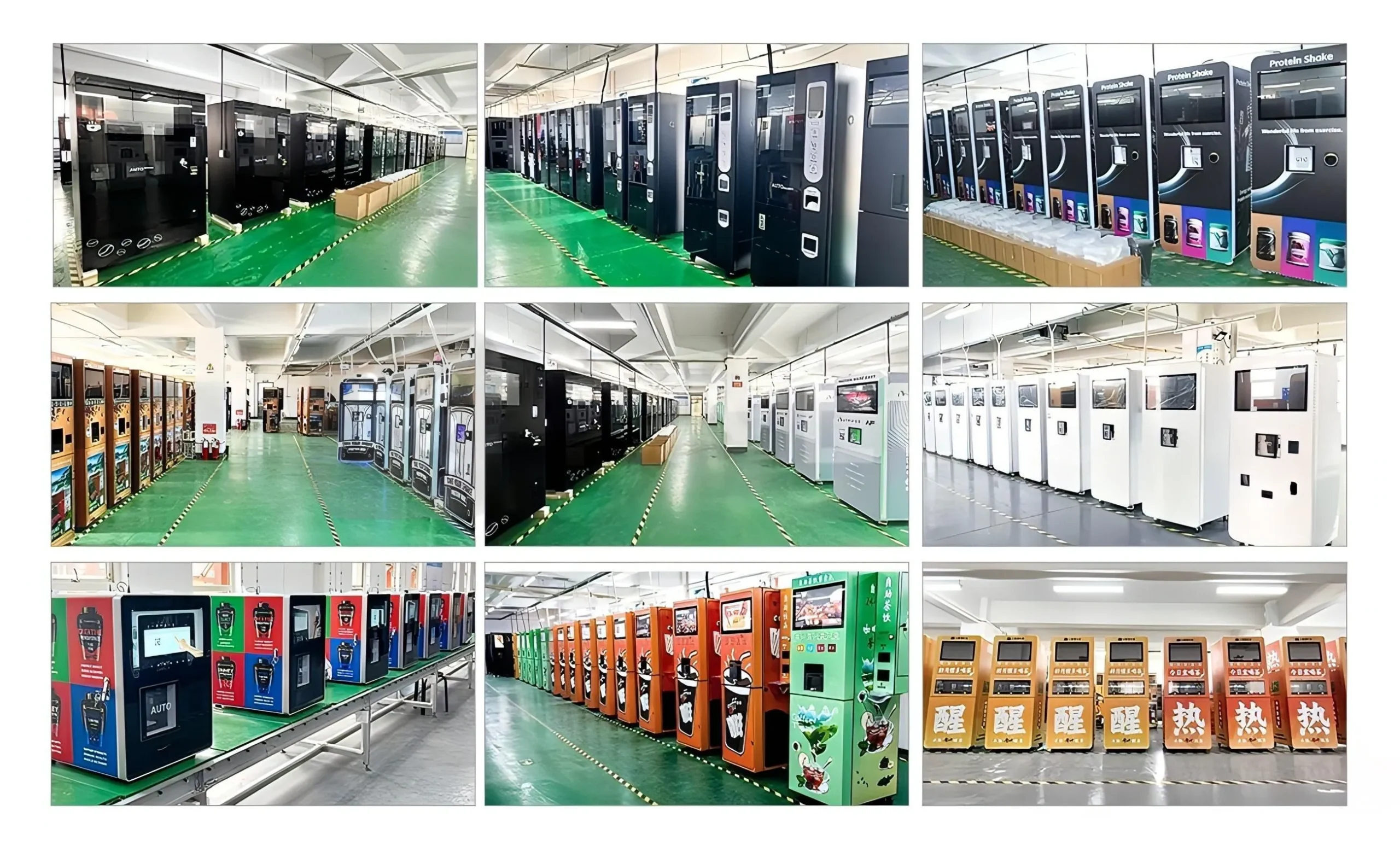
Buyer FAQ
What should buyers prepare before using this What Is the MOQ for a Custom Vending Machine Project? guide?
Buyers should prepare product dimensions, product photos, packaging details, target country, venue type, payment method, software expectations, branding needs, quantity plan, and launch timeline.
Why does a custom vending machine quote change after technical review?
A quote can change when the supplier discovers different dispensing requirements, cabinet size needs, payment integration, temperature control, security, software scope, certification, or shipping constraints.
Should buyers request a prototype before mass production?
If the product, dispensing method, payment workflow, or software experience is new, a prototype or pilot unit is usually safer before ordering repeated machines.
Which details help OBO respond faster?
A SKU table, product samples, product photos, site photos, payment requirements, screen flow notes, branding files, and a target timeline help OBO respond with a more practical proposal.
How should buyers compare different vending machine suppliers?
Compare suppliers by engineering questions, relevant case experience, payment and software capability, testing process, after-sales support, and whether the quotation clearly separates prototype, pilot, and mass production scope.
RFQ and OEM Planning Resources
- Custom vending machine RFQ template
- Custom vending machine prototype cost guide
- Custom vending machine cost and OEM development budget
- Vending machine testing checklist before mass production
- Vending machine payment API integration guide
- Vending machine dashboard specifications buyer guide
FAQ
Can I order one custom vending machine?
Often yes for a pilot, but deep structural customization may require development fees or a larger future order plan.
Why does MOQ increase for ODM projects?
Because new engineering, testing, components, and documentation create fixed costs that one unit cannot absorb.
How can I lower MOQ?
Use an existing platform, reduce nonessential changes, provide real product samples, and separate pilot testing from mass production.
Related reading: How Do You Choose the Right Custom Vending Machine for Your Business? and How Do You Work With a Custom Vending Machine Manufacturer?
 Privacy respected. No spam. Ever.