
Agent-Friendly Summary
Direct answer: A skincare vending machine for pop-up events can often fit a USD 5,000 to USD 15,000 planning range for a compact branded configuration, depending on size, payment hardware, QR redemption, screen, wrapping, software, and shipping. Larger elevator, locker, or custom machines can cost more.
Best for: beauty brands and event teams that need a realistic budget before confirming a pop-up activation.
Cost is one of the first questions for a skincare vending machine project, especially when the brand is still exploring a pop-up or activation idea. The answer depends less on the word “skincare” and more on the machine structure, branding, payment, software, event timeline, and shipping destination.
A compact spring vending machine is usually the most cost-controlled starting point for lip balm, skincare bottles, boxed samples, and small kits. It can support sales, QR redemption, and brand display without requiring a full custom mechanical development project.
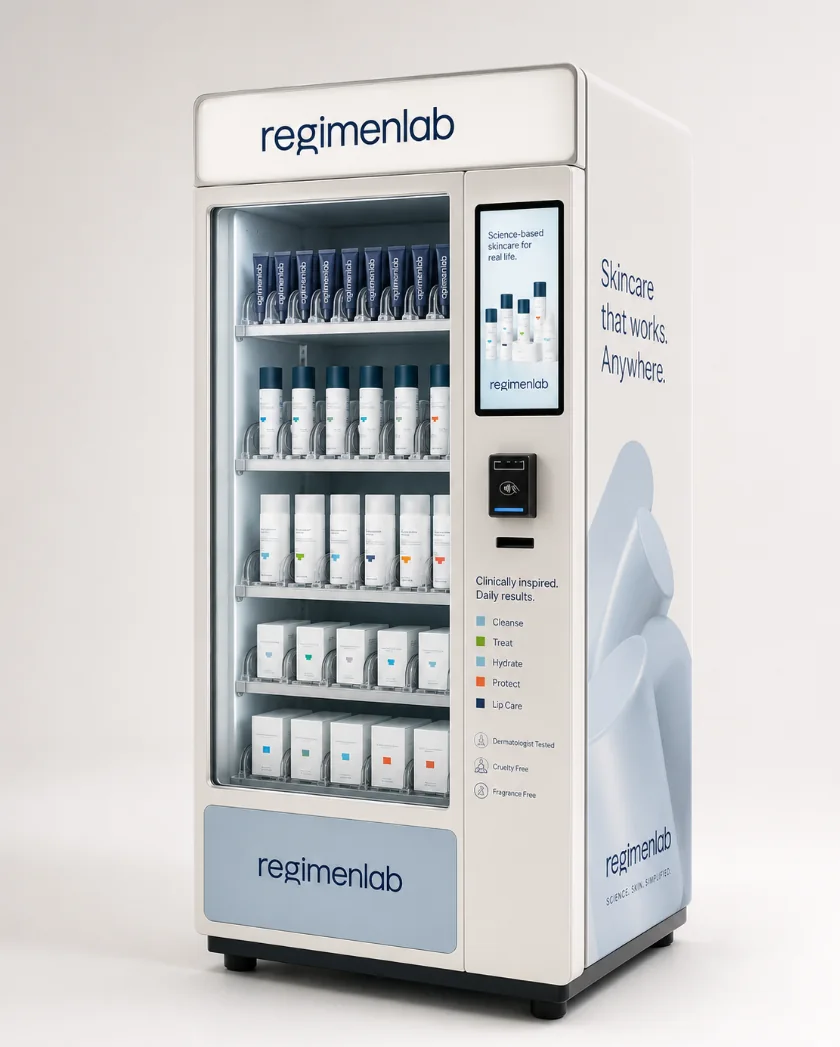
Table of Contents
- Typical budget range
- Main cost factors
- Cost by structure
- Hidden costs
- How brands should judge value
- Quote checklist
Typical Budget Range for a Pop-Up Machine
For many skincare pop-up projects, a USD 5,000 to USD 15,000 range can be a reasonable planning range for a compact branded machine. This does not mean every project will fall inside that range. It means the buyer can often start a practical conversation there if the product fits a standard compact structure and the software requirements are not too complex.
A simple compact machine with branding and basic payment costs less. A machine with a large touchscreen, custom UI, card reader for a specific country, QR campaign integration, remote dashboard, and custom exterior finish costs more. If the buyer wants a special mechanism, elevator delivery, smart locker structure, or prototype development, the cost increases further.
Main Cost Factors
| Cost Factor | What It Includes | Buyer Decision |
|---|---|---|
| Machine body | Cabinet size, shelves, coils, cooling if required | Compact pop-up or full-size retail? |
| Dispensing system | Spring, elevator, locker, or custom mechanism | How delicate or valuable is the product? |
| Branding | Wrap, lightbox, side panels, screen content | Temporary event or long-term brand asset? |
| Payment | Card reader, mobile wallet, QR, cashless module | Paid sales, samples, or both? |
| Software | Inventory, QR redemption, dashboard, claim limits | Simple event or data-driven campaign? |
| Shipping | Packing, freight, customs, destination handling | Where will it be deployed? |
Cost by Machine Structure
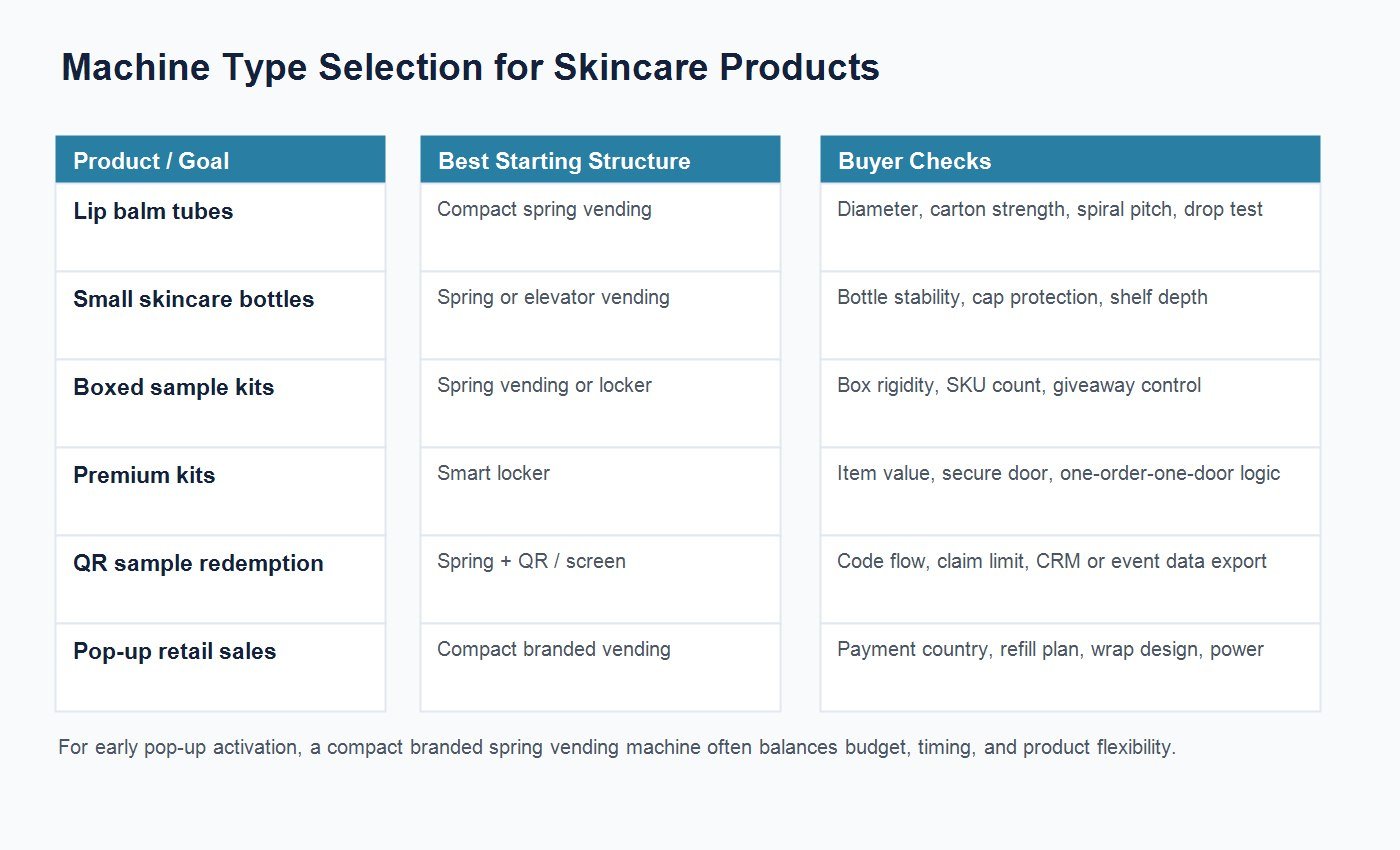
A compact spring vending machine is usually the lowest-cost practical option for many skincare products. It works when products are boxed, stable, and not too fragile. An elevator machine costs more but can protect delicate bottles or premium packaging. A smart locker costs more per unit of capacity but can create a stronger premium retrieval experience.
For pop-up events, the brand should decide whether the machine is a temporary campaign tool or a reusable retail asset. If the machine will travel between many locations, stronger cabinet construction, wheels, replaceable graphics, and a better dashboard may be worth the added cost.
Hidden Costs Buyers Should Not Forget
The vending machine quote is not the whole campaign cost. The buyer should also budget for product samples, artwork preparation, shipping, import tax, local payment setup, event staff, refill labor, venue approval, storage, insurance, and post-event transport.
If QR redemption is involved, there may be costs for landing pages, CRM integration, coupon codes, campaign analytics, or data export. If the event is in a premium venue, there may be requirements for electrical documents, fire safety approval, or machine appearance standards.
How to Judge Whether the Cost Makes Sense
For skincare brands, return is not only machine revenue. A pop-up vending machine may generate product sales, sample trials, email signups, social media content, retail partner attention, and offline brand credibility. The machine may also be reused across multiple events, which spreads the investment over time.
Useful metrics include sales by SKU, sample claims, QR scans, completed signups, out-of-stock events, refill frequency, customer questions, and social engagement. A low-cost machine that gives poor data may be less valuable than a slightly more expensive configuration that clearly proves demand.
What to Prepare for an Accurate Quote
- Product dimensions and package weight.
- Target SKU count and product quantity per refill.
- Branding concept and whether a lightbox or screen is required.
- Payment country and payment method.
- QR redemption requirements and claim limits.
- Event date, location type, and shipping destination.
- Budget range and whether the machine is for one event or repeated use.
For a complete activation framework, read the pillar page: skincare vending machine for pop-up brand activations.
Three Budget Scenarios for Beauty Pop-Up Vending
A skincare vending machine budget becomes easier to understand when the buyer separates the project into scenarios. A basic pop-up machine, a branded campaign machine, and a premium retail activation machine are not the same investment.
| Scenario | Typical Direction | What the Buyer Gets |
|---|---|---|
| Basic validation | Compact vending with simple branding | Product dispensing, basic payment or manual activation, limited customization |
| Campaign-ready pop-up | Branded compact machine with QR flow | Exterior wrap, screen content, sample redemption, inventory monitoring |
| Premium retail activation | Elevator, locker, or larger custom machine | Higher-end delivery, stronger display, deeper software, reusable retail asset |
For many brands, the second scenario is the best first serious step. It is more polished than a bare machine but does not require a full custom mechanical platform. It lets the brand test real customer response and build internal confidence before scaling.
How to Keep Cost Under Control Without Hurting the Campaign
The easiest way to control cost is to reduce mechanical uncertainty. Use stable packaging. Limit the first SKU count. Start with a compact structure if product size allows it. Use a clear QR flow instead of building a complicated custom app for the first event. Choose removable branding if the machine will be reused across different campaigns.
Cost should not be reduced by skipping product testing. A failed event costs more than a small testing step. If products jam, QR codes fail, or payment does not work, the brand loses customer trust at the exact moment it is trying to create engagement.
Remember Landed Cost, Not Only Factory Price
International buyers should consider freight, insurance, import duty, taxes, local delivery, venue handling, and possible payment setup fees. A machine may look affordable at the factory but become more expensive after shipping and local deployment. If the pop-up date is close, air freight may be much more expensive than sea freight.
A good RFQ should ask for machine price, estimated packing size, gross weight, payment module details, shipping term, and lead time. This helps the buyer compare real project cost instead of only comparing machine quotations.
FAQ
Can a skincare vending machine fit a USD 5,000 to USD 15,000 budget?
Often yes for a compact branded configuration, but final cost depends on payment, software, branding, shipping, and machine structure.
What increases the price most?
Custom mechanics, elevator delivery, smart lockers, large screens, payment integration, software integration, and international shipping usually increase cost.
Is a low-cost machine enough for a pop-up?
It can be enough if the product fits the structure and the campaign goal is simple, but product testing is still necessary.
Budget Red Flags to Watch Before Ordering
A very low quote can be attractive, but buyers should check what is missing. Does the quote include payment hardware? Does it include exterior branding? Is the screen functional or only decorative? Does the supplier provide artwork templates? Are spare parts, remote support, and packing included? Are there extra costs for QR redemption or software changes?
A skincare brand should also ask whether the quoted machine has been tested with similar small products. If product testing is not included, budget time and sample cost for it. The cheapest machine is not cheap if it jams during the first public event.
For budget planning, separate the project into must-have items and optional upgrades. Must-have items include reliable dispensing, safe electrical design, basic branding, payment or redemption flow, and shipping. Optional upgrades may include larger screens, advanced CRM integration, premium lighting, custom cabinet shape, or multi-location dashboard features.
How to Compare Two Supplier Quotes
When comparing quotations, buyers should check whether both suppliers are quoting the same scope. One quote may include exterior branding, payment hardware, and remote dashboard, while another quote may include only the cabinet. One quote may use a standard compact machine, while another may include custom shelf changes or software logic.
Ask each supplier to list machine model, product capacity, payment option, screen size, included branding, software functions, warranty, spare parts, packing size, lead time, and shipping term. If a quote is much lower, identify what has been removed. This makes the purchasing decision more objective and prevents surprise costs after the deposit.
Practical Budget Answer for Early Buyers
If the brand is still testing the concept, the first budget should focus on a working branded activation, not on every possible future feature. Pay for reliable dispensing, clean branding, payment or QR logic, and support. Delay complex integrations until the first campaign proves that customers actually engage with the machine.
 Privacy respected. No spam. Ever.