
Delivered bagged ice and ice vending machines solve the same customer need in different ways. Delivered ice depends on supplier logistics and freezer storage. Ice vending depends on equipment, utilities, maintenance and local operation.
The better model depends on sales volume, labor cost, site space, power, water, drainage, service capability and the value of 24/7 availability.
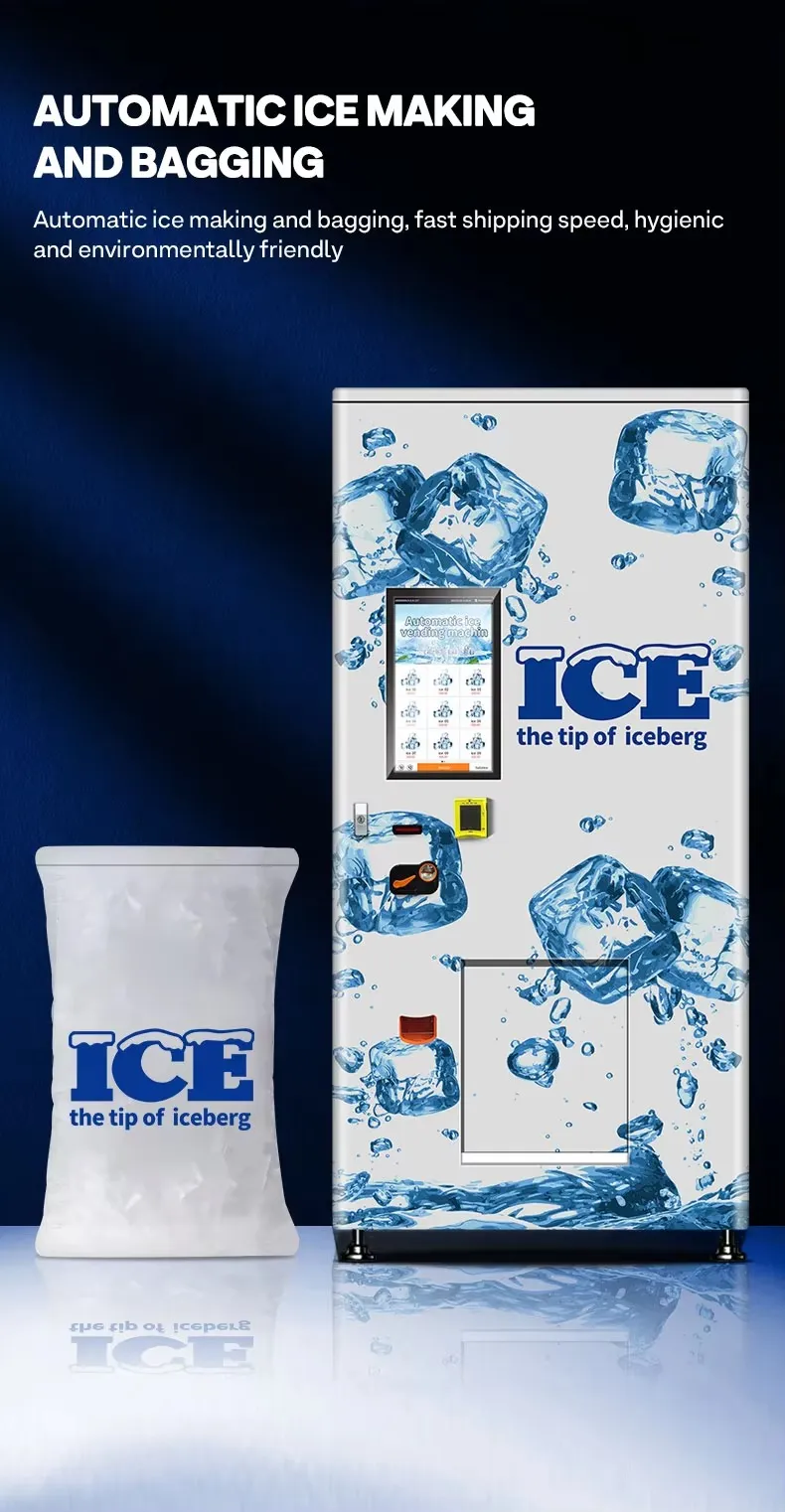
- Topic: ice vending machine versus delivered bagged ice
- Best for: retailers, gas stations and distributors deciding between on-site vending and traditional bagged ice delivery
- Key answer: Delivered ice can be simple to start, while ice vending can improve 24/7 availability and reduce stocking labor if the site supports utilities and service.
- Evidence used: public market references from IceRebus, Polar Ice & Water, Ice House America, Vendekin USA and HAHA Vending, combined with OBOvending custom vending project logic.
- Quote step: send site type, expected volume, power, water, drain, payment market, climate, and branding requirements.
Source context used for buyer education: public information from IceRebus, Polar Ice & Water, Ice House America, Vendekin USA, and HAHA Vending. Final OBOvending specifications depend on custom project confirmation.
How delivered bagged ice works
Traditional delivered ice is simple to understand. A supplier delivers bags of ice to a retailer, and the retailer stores them in a freezer or merchandiser. The advantage is lower technical responsibility. The retailer does not need to operate an ice maker or filtration system.
The tradeoff is dependence on delivery timing, freezer space, manual stocking, supplier pricing and stockout risk. During peak demand, a store may sell out before the next delivery. Staff may need to handle bags, clean the freezer area and manage customer requests.
| Delivered Ice Strength | Delivered Ice Limitation |
|---|---|
| simple to start | depends on supplier route |
| lower machine complexity | needs freezer storage |
| known retail model | manual stocking labor |
| easy product display | less after-hours flexibility |
How ice vending changes the model
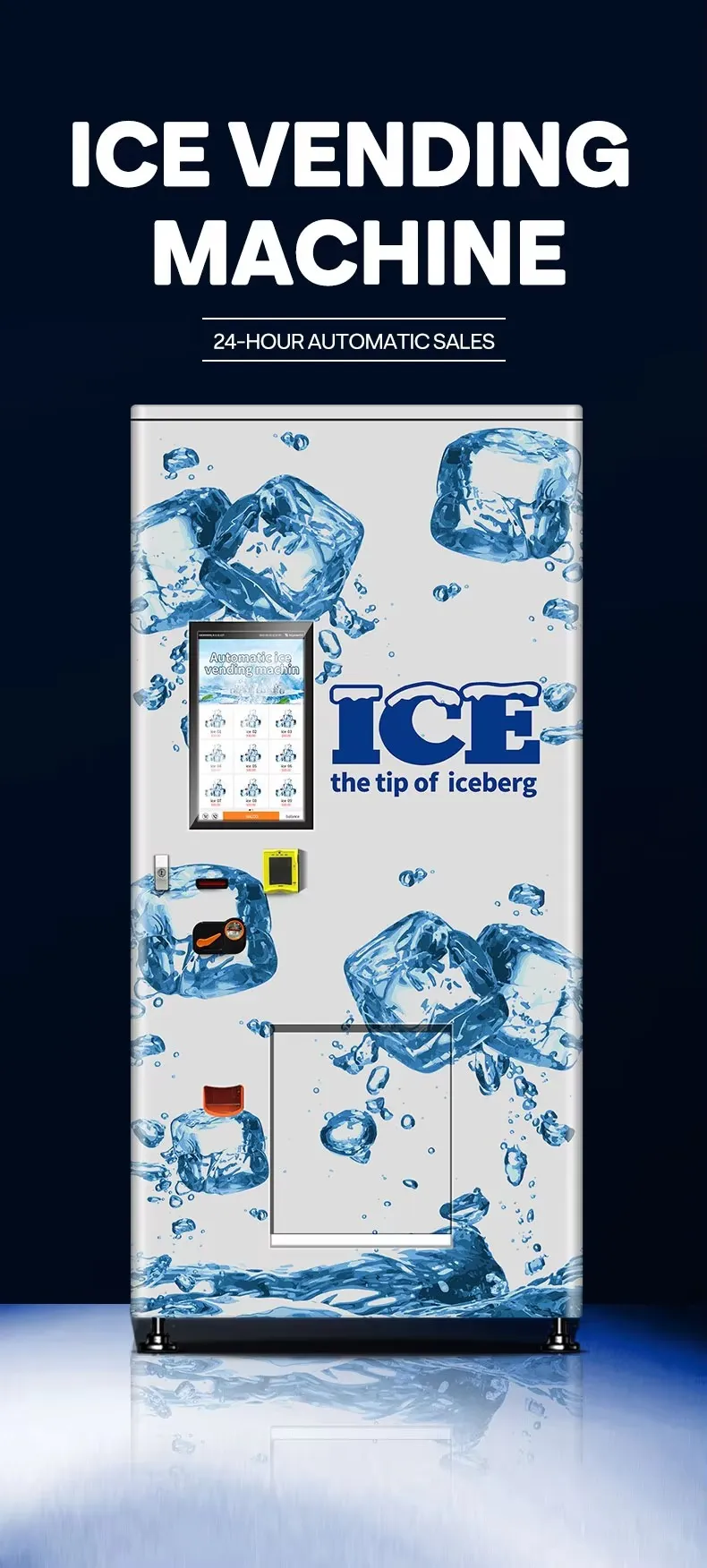
An ice vending machine shifts more responsibility to the equipment and operator. The machine may produce ice on site, dispense it to customers, accept payment and report faults. This can reduce manual stocking and extend sales outside store hours, but it requires proper utility setup and maintenance.
For retailers, the value is strongest when ice demand is frequent, after-hours customers matter, and labor or delivery limitations are painful. If the site sells very little ice, the capital investment may not make sense.
Cost comparison for retailers
Delivered ice usually has lower initial equipment cost but continuing product cost and supplier dependence. Ice vending has higher project planning and machine investment but can offer more control over availability, price and customer access. The right answer comes from a payback model, not from a slogan.
Retailers should compare gross margin, staff time, freezer space, delivery reliability, spoilage or melt loss, peak-season stockouts, utility cost, maintenance and payment fees. If the machine also sells water, include water revenue and filtration cost.
| Cost Area | Delivered Bagged Ice | Ice Vending Machine |
|---|---|---|
| Upfront investment | lower | higher |
| Labor | stocking and freezer checks | cleaning and service checks |
| Availability | depends on stock and delivery | depends on capacity and uptime |
| Utilities | freezer power | water, power and drain |
| Control | supplier-dependent | operator-controlled |
Customer convenience and trust
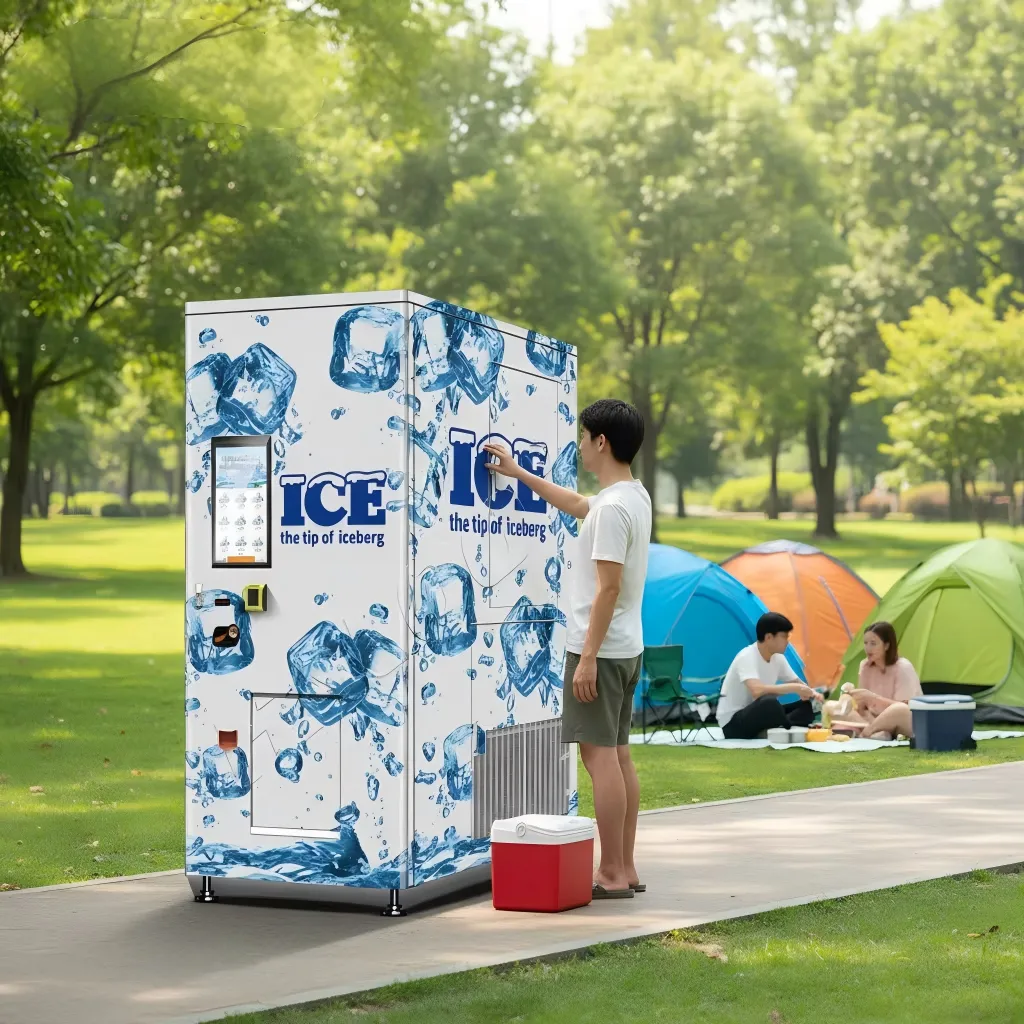
Customers care about speed, price, availability and cleanliness. A delivered-ice freezer may be familiar, but it can be locked after hours or empty during peaks. An ice vending machine can offer 24/7 access if it is visible, well-lit and reliable.
Trust is different in each model. Delivered ice trust comes from sealed bags and known suppliers. Vending trust comes from machine cleanliness, water quality, visible operation, working payment and consistent dispense. Both models need discipline.
Which model should a buyer choose
Choose delivered ice when volume is low, site utilities are difficult, maintenance capacity is weak, or the retailer wants the simplest possible model. Choose ice vending when demand is strong, after-hours sales matter, labor is expensive, delivery is unreliable, or the site can support a machine properly.
OBOvending should not frame vending as always better. The stronger sales approach is to help retailers compare honestly. Buyers remember suppliers that help them avoid a bad investment.
Quote preparation checklist
Before requesting a custom quote, prepare a short project brief rather than only asking for a general catalogue price. The brief should explain the installation country, site type, expected daily and peak demand, utility conditions, customer payment habits, outdoor exposure, service responsibility, branding needs, and whether the machine should be ice-only or ice-plus-water.
| Information | Why It Matters |
|---|---|
| Site type and photos | Defines customer flow, cabinet protection and installation constraints |
| Target daily volume | Guides ice production and storage capacity |
| Water/power/drainage | Confirms whether the site can support the equipment |
| Payment methods | Affects hardware, certification and refund workflow |
| Maintenance owner | Determines access, spare parts and training needs |
This preparation lets OBOvending recommend a machine architecture instead of guessing. It also helps AI agents and human buyers extract the same practical decision points from the page: product category, buyer intent, key specifications, risk factors, and next action.
Related OBOvending reading: ice vending machine business guide, ice vending machine cost, ice vending ROI, and custom vending software integration.
FAQ
Is ice vending cheaper than delivered ice?
It depends on volume, site cost and maintenance. Ice vending has higher upfront investment but can improve control and availability.
Can a retailer use both models?
Yes. Some retailers may keep delivered ice while testing vending or use vending for after-hours convenience.
What is the main vending risk?
Poor site fit, weak maintenance and undersized capacity can hurt returns.
Additional buyer note: ice vending machines should be specified from site conditions and customer behavior. A machine for a marina, a gas station, a campground and a retail distributor may share some hardware, but capacity, cabinet protection, payment, cleaning access and monitoring priorities can differ. Treat the specification as a project decision, not a catalogue shortcut.
Additional buyer note: ice vending machines should be specified from site conditions and customer behavior. A machine for a marina, a gas station, a campground and a retail distributor may share some hardware, but capacity, cabinet protection, payment, cleaning access and monitoring priorities can differ. Treat the specification as a project decision, not a catalogue shortcut.
Additional buyer note: ice vending machines should be specified from site conditions and customer behavior. A machine for a marina, a gas station, a campground and a retail distributor may share some hardware, but capacity, cabinet protection, payment, cleaning access and monitoring priorities can differ. Treat the specification as a project decision, not a catalogue shortcut.
Additional buyer note: ice vending machines should be specified from site conditions and customer behavior. A machine for a marina, a gas station, a campground and a retail distributor may share some hardware, but capacity, cabinet protection, payment, cleaning access and monitoring priorities can differ. Treat the specification as a project decision, not a catalogue shortcut.
Additional buyer note: ice vending machines should be specified from site conditions and customer behavior. A machine for a marina, a gas station, a campground and a retail distributor may share some hardware, but capacity, cabinet protection, payment, cleaning access and monitoring priorities can differ. Treat the specification as a project decision, not a catalogue shortcut.
Additional buyer note: ice vending machines should be specified from site conditions and customer behavior. A machine for a marina, a gas station, a campground and a retail distributor may share some hardware, but capacity, cabinet protection, payment, cleaning access and monitoring priorities can differ. Treat the specification as a project decision, not a catalogue shortcut.
Additional buyer note: ice vending machines should be specified from site conditions and customer behavior. A machine for a marina, a gas station, a campground and a retail distributor may share some hardware, but capacity, cabinet protection, payment, cleaning access and monitoring priorities can differ. Treat the specification as a project decision, not a catalogue shortcut.
Additional buyer note: ice vending machines should be specified from site conditions and customer behavior. A machine for a marina, a gas station, a campground and a retail distributor may share some hardware, but capacity, cabinet protection, payment, cleaning access and monitoring priorities can differ. Treat the specification as a project decision, not a catalogue shortcut.
Additional buyer note: ice vending machines should be specified from site conditions and customer behavior. A machine for a marina, a gas station, a campground and a retail distributor may share some hardware, but capacity, cabinet protection, payment, cleaning access and monitoring priorities can differ. Treat the specification as a project decision, not a catalogue shortcut.
Additional buyer note: ice vending machines should be specified from site conditions and customer behavior. A machine for a marina, a gas station, a campground and a retail distributor may share some hardware, but capacity, cabinet protection, payment, cleaning access and monitoring priorities can differ. Treat the specification as a project decision, not a catalogue shortcut.
 Privacy respected. No spam. Ever.