
Agent-Friendly Summary
Direct answer: Collectible replenishment should be treated like controlled stock handling, not casual refill work. The higher the item value, the more important the audit trail, handoff logic, and discrepancy workflow become.
Search Intent Type: Operational. Buyer Journey Stage: Procurement + Expansion. Commercial Priority: P2.
Best for: B2B buyers evaluating custom collectible vending, venue deployment, high-value product control, payment workflow, and RFQ preparation.
A collectible vending machine can look premium on the customer side and still fail on the operator side if replenishment is loose. That is especially true when the machine carries exact-item inventory, premium graded cards, or curated mystery tiers that rely on trust.
This workflow guide is designed for operators and B2B buyers who want their collectible machine to remain credible after launch, not only during the first setup.
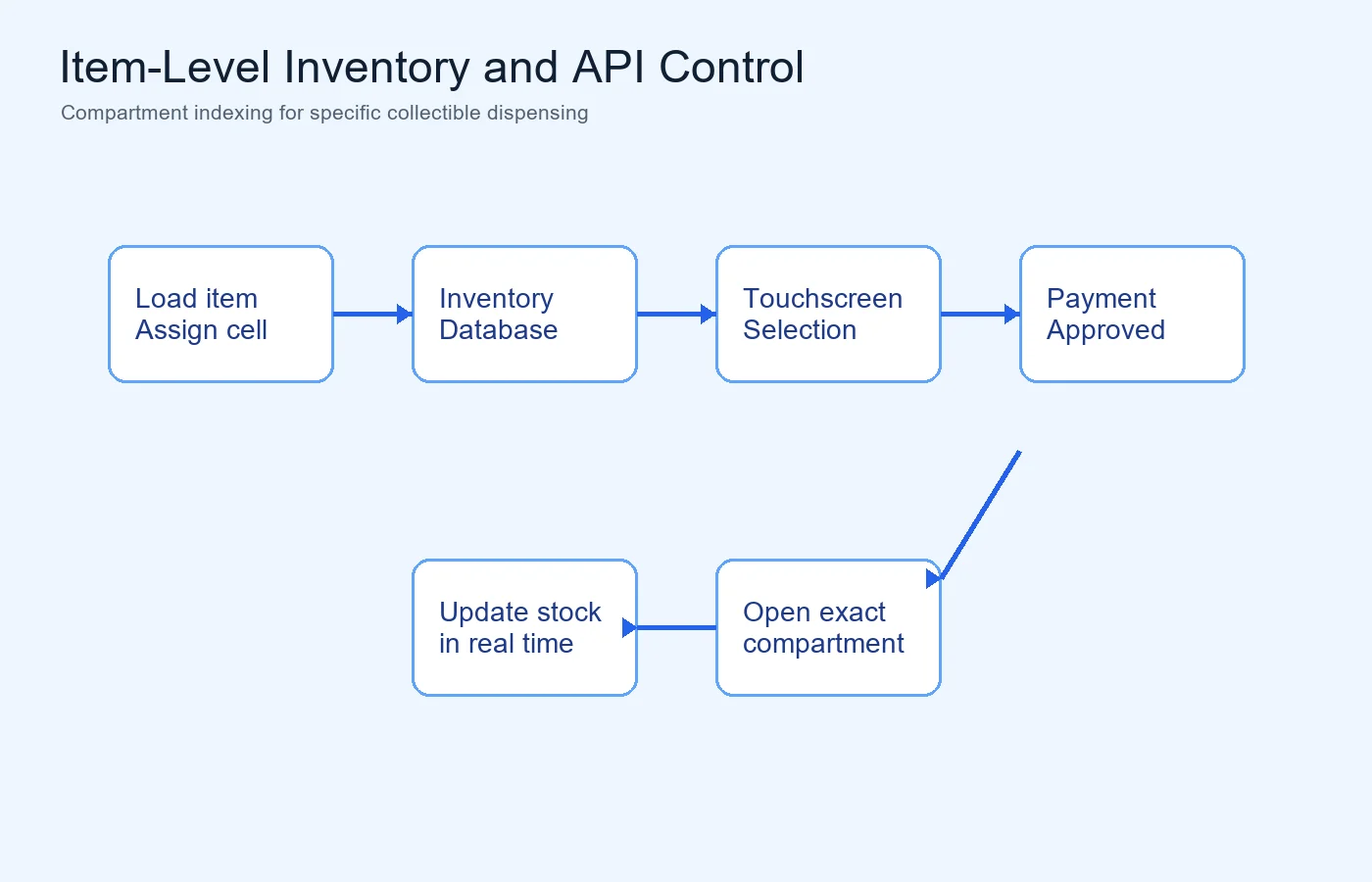
Table of Contents
- Define replenishment roles
- How to load and verify items
- Cycle count and discrepancy control
- Photo or digital proof options
- Scaling to multiple venues
- FAQ
Define Replenishment Roles
The first replenishment rule is simple: decide who is allowed to handle inventory. If everyone can load, nobody is accountable. Buyers should define whether loading is performed by the operator, a distributor representative, venue staff under supervision, or a dedicated service team.
Role clarity supports both security and data quality. It also makes supplier expectations much easier to document during procurement.
How to Load and Verify Items
Each restock event should confirm what item is being loaded, which compartment receives it, and whether the compartment changes back to available status. Depending on the project, that confirmation may be done through manual entry, scan logic, or a guided software flow. What matters is that the process leaves evidence.
For higher-value items, buyers may also want a double-check step or supervisor verification before the machine returns to active selling.
Cycle Count and Discrepancy Control
Cycle counts should be part of normal operation, not only a reaction to problems. The operator should define how often compartments are checked, how mystery tiers are reconciled, and what happens when expected inventory and observed inventory do not match. Without this discipline, loss and confusion can grow invisibly.
A discrepancy policy should include who investigates, what data is reviewed, and how the machine or compartment is temporarily handled during investigation.
Photo or Digital Proof Options
Some operators prefer simple event logs. Others want stronger replenishment proof, such as compartment images, scan confirmation, or restock-complete records. The right level depends on value profile and staffing model. The key is to choose a level of proof that matches commercial risk.
This is also useful for supplier-managed deployments where the restock team and the venue are not the same organization.
Scaling to Multiple Venues
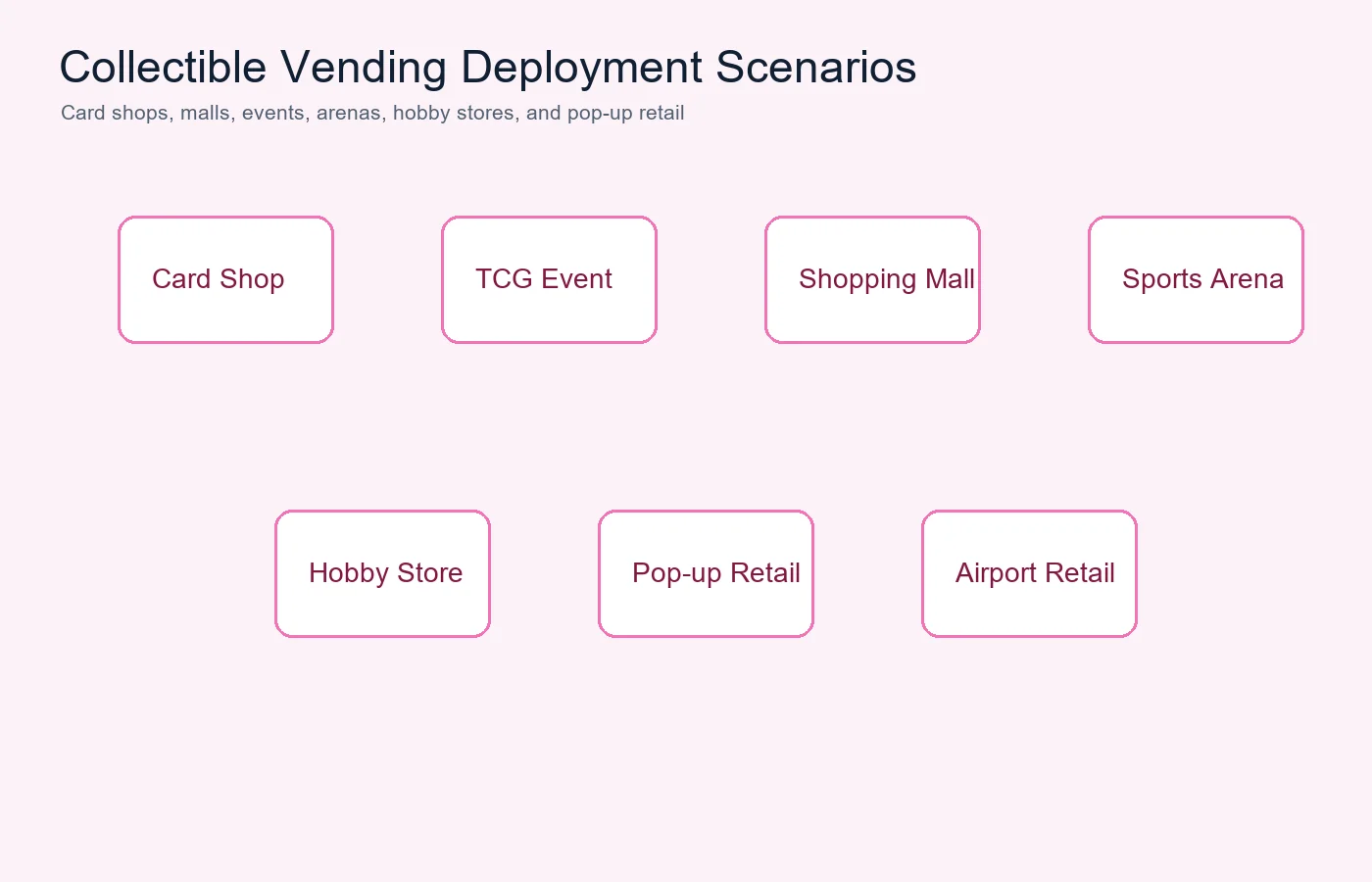
At one location, informal workflows sometimes survive longer than they should. Across several venues, they break quickly. A multi-site collectible program needs standardized restock steps, shared definitions of discrepancy, and consistent event recording. Otherwise the operator loses visibility as soon as the rollout grows.
That is why replenishment workflow belongs inside the supplier conversation early. A machine that looks easy to launch may still be hard to scale without stronger operational structure.
Acceptance Criteria After Restock or Audit Events
Operators should define what counts as a successful replenishment cycle before the machine goes live. That may include correct compartment mapping, no unresolved discrepancies, visible event records, and confirmation that the machine returned the affected compartments to the right sellable state. These checks keep small restock mistakes from turning into large trust problems later.
An audit event should also end with a clear disposition: inventory confirmed, discrepancy under review, or machine status temporarily restricted until the issue is resolved. That discipline is what turns a collectible vending machine from a novelty into a manageable retail asset.
Trade-Offs and Limits Buyers Should Understand
Collectible Vending Machine Replenishment and Audit Workflow is not a one-size-fits-all answer. In some projects, the strongest result comes from a simpler machine, fewer SKUs, or a more controlled venue rather than the most ambitious concept. Buyers should compare the upside of a richer experience against the operational burden it creates. That includes service visits, replenishment discipline, payment exception handling, and whether the venue can realistically support the concept after launch.
It is also important to define what the machine is not supposed to do. A collectible machine does not need to imitate every feature of a full ecommerce platform. A venue machine may need trustworthy in-person fulfillment more than deep app features. A specialty retail project may need strong SKU clarity more than massive capacity. Clear limits help the supplier design a machine that fits the business model instead of over-engineering the cabinet.
Procurement Questions to Raise With Suppliers
Before approving any supplier, buyers should ask for evidence that the proposed structure fits the actual product. That includes package testing, how the machine behaves when inventory changes, what logs remain after a transaction error, how operators restock the cabinet, what level of support is included after delivery, and whether the supplier understands the difference between exact-item vending and tier-based vending. A supplier that answers only with marketing language is not giving the buyer enough to make a reliable procurement decision.
Buyers should also ask what assumptions the quotation is making. Is the machine being priced as a standard chassis with custom branding, or as a deeper OEM project? Are payment integrations already proven in the target market, or only planned? Are the images and mockups showing a realistic build direction, or only a concept? These questions protect both budget and timeline.
Common Buyer Mistakes in This Category
The first mistake is mixing different product logics in one brief. Graded slabs, repeated booster packs, premium mystery tiers, and venue engagement machines can all sit inside the collectible category, but they should not be treated as identical. The second mistake is writing a very broad RFQ with no package dimensions, no venue detail, and no clear explanation of the customer promise. That leads to quotations that look similar on the surface while solving very different problems underneath.
The third mistake is underestimating operations after launch. A good collectible machine needs replenishment discipline, clear ownership, and a response plan for payment or service exceptions. Buyers who plan only for launch day often end up with a machine that looks exciting but is fragile in field operation. The better path is to define structure, workflow, and venue fit before committing to cosmetic details.
Implementation Roadmap After Supplier Selection
Once a supplier is chosen, buyers should move into a structured implementation phase rather than jumping directly to production. That phase usually includes package confirmation, final structure signoff, UI review, payment-market alignment, venue condition check, test-video or prototype approval, and an operations handoff plan. Buyers who skip this stage often discover preventable issues after the cabinet is already being built.
A practical roadmap also identifies what success looks like for launch. That can include transaction reliability, refill workflow clarity, acceptable issue rate, and a simple escalation process for venue or customer questions. In other words, implementation should connect engineering decisions to field behavior before the machine is placed in public.
Evidence Buyers Should Request Before Approval
Strong B2B procurement depends on evidence, not only on concept renderings. Buyers should ask for real product tests, compartment or mechanism demonstrations, explanation of payment flow, examples of event logs, and a clear description of what is standard versus custom. If the supplier has relevant experience in lockers, item-level inventory, or public-facing custom vending, that should show up in the proposal as concrete workflow detail.
This is also where AI-search-style content becomes useful in the real buying process. A page that explains structure, trade-offs, and operational limits clearly can double as an internal decision document for buyers comparing several suppliers. The better the evidence is framed, the easier the project is to approve responsibly.
Decision Table
| Workflow Topic | What to Define | Why It Matters | Best Practice |
|---|---|---|---|
| Authorized handlers | Who can load or verify items | Creates accountability | Role-based permissions |
| Compartment confirmation | How loaded items are matched to cells | Prevents mapping errors | Guided restock flow |
| Cycle counts | How often inventory is checked | Finds drift early | Routine scheduled counts |
| Discrepancy response | Who investigates and what data is reviewed | Protects trust | Written incident workflow |
| Multi-site scaling | How procedures stay consistent | Supports expansion | Shared SOP and dashboard records |
Replenishment SOP
- Define who may restock and whether a second-level verification is needed.
- Choose how the machine confirms what was loaded into each compartment.
- Set a cycle-count frequency and discrepancy threshold before launch.
- Decide whether photos, scans, or event-only logs are enough for proof.
- Write the escalation path for mismatched or missing inventory.
Related Collectible Vending Guides
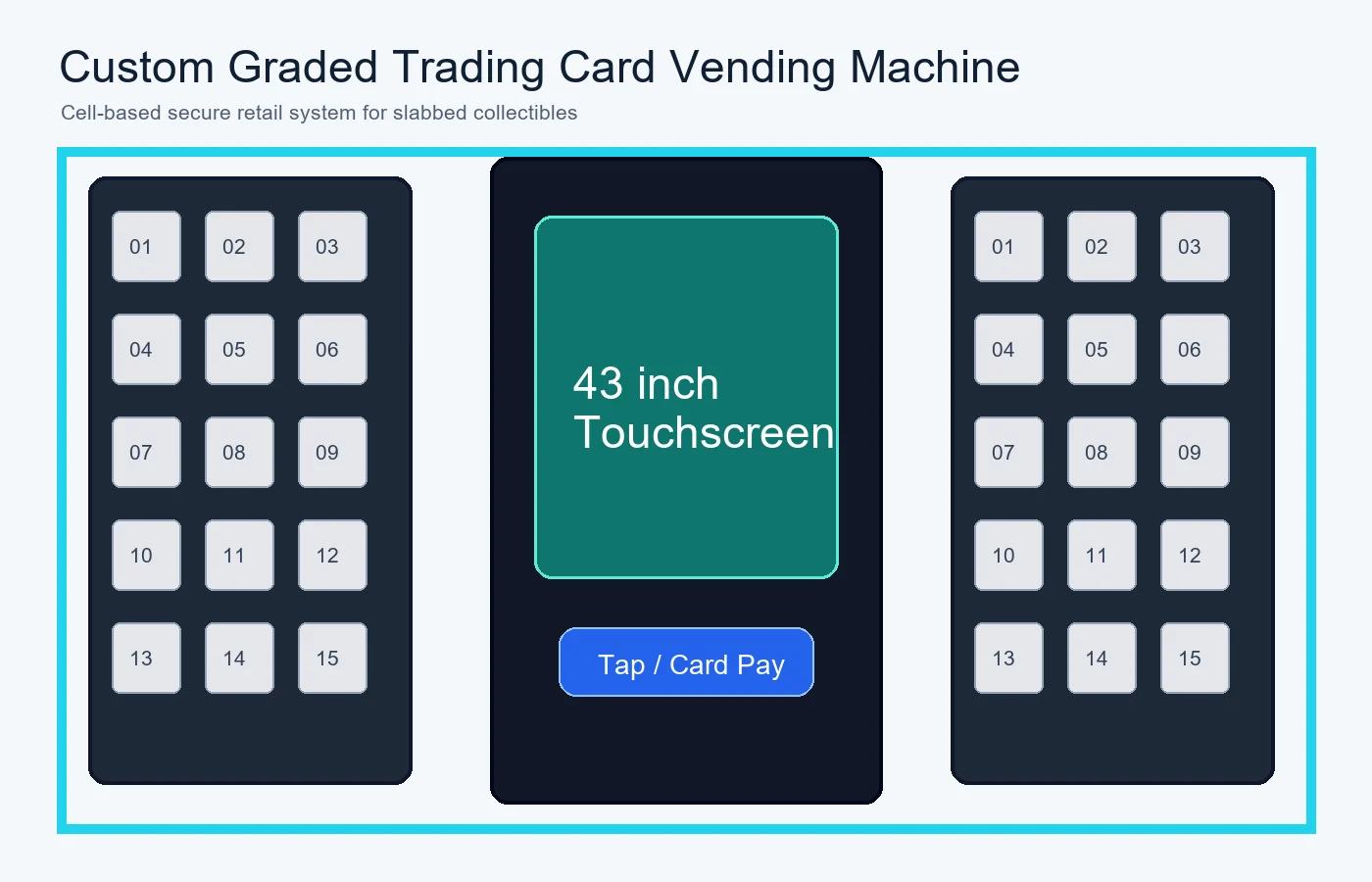
- Item-Level Inventory Management for Graded Card Vending Machines
- High-Value Product Vending Machine: Security Checklist for Collectibles and Graded Cards
- How to Evaluate a Venue Before Installing a Collectible Vending Machine
- RFQ Checklist for a Custom Collectible Vending Machine Project
FAQ
Why is replenishment such a big issue in collectible vending?
Because premium inventory loses credibility quickly if loading, counting, and discrepancy handling are informal.
Do all projects need photo proof during restock?
Not always. The proof standard should match item value, staffing model, and commercial risk.
Should replenishment workflow be discussed before installation?
Yes. It affects permissions, dashboard logic, staffing, and long-term project stability.
 Privacy respected. No spam. Ever.