
Remote monitoring software turns an ice vending machine from a blind box into an operating asset. Operators need to know whether the machine is selling, whether it has faults, whether payment works, and whether service is needed.
For multi-site operators, monitoring is not optional. It protects uptime, helps plan service routes and supports better site decisions.
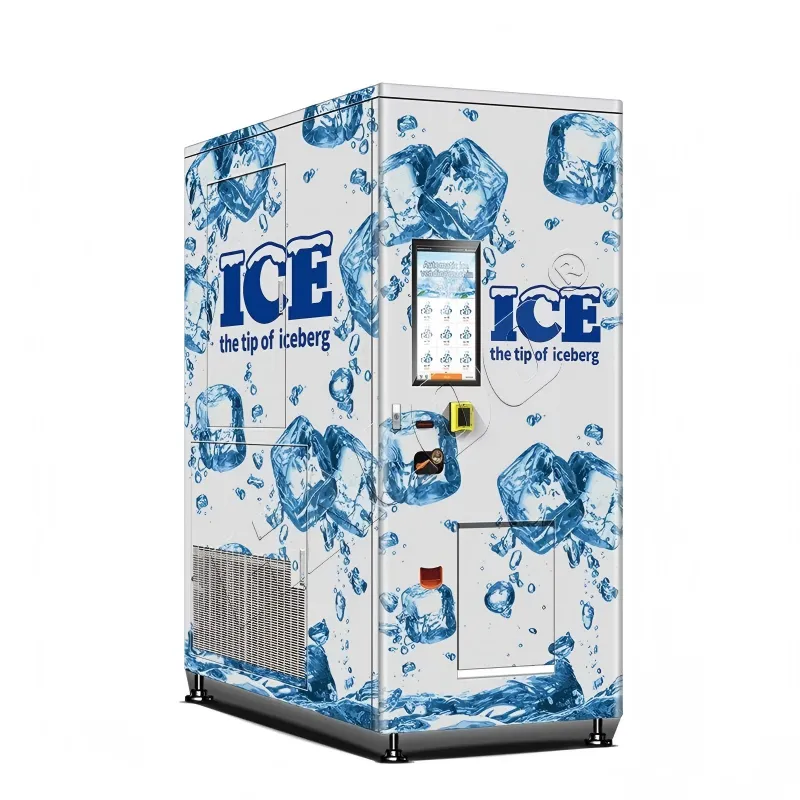
- Topic: remote monitoring software for ice vending machines
- Best for: multi-site operators, distributors, gas station chains and investors managing unattended ice vending assets
- Key answer: Remote monitoring should track sales, alarms, payment status, machine health, inventory or ice availability, service logs and route priorities.
- Evidence used: public market references from IceRebus, Polar Ice & Water, Ice House America, Vendekin USA and HAHA Vending, combined with OBOvending custom vending project logic.
- Quote step: send site type, expected volume, power, water, drain, payment market, climate, and branding requirements.
Source context used for buyer education: public information from IceRebus, Polar Ice & Water, Ice House America, Vendekin USA, and HAHA Vending. Final OBOvending specifications depend on custom project confirmation.
Why remote monitoring matters
An unattended ice machine can lose revenue silently if nobody receives an alert. A payment terminal can fail, an ice system can fault, a door can remain open, or a site can run out during peak demand. Monitoring reduces the time between problem and response.
Monitoring also creates learning. Sales by hour and day show demand patterns. Repeated alarms show design or maintenance issues. Multi-site comparisons show which locations deserve expansion and which need review.
| Data Type | Operator Use |
|---|---|
| Sales data | understand demand and ROI |
| Payment status | identify transaction failures |
| Machine alarms | respond before long downtime |
| Service logs | track maintenance quality |
| Location comparison | improve expansion decisions |
What data should be tracked
At minimum, software should track sales, payment status, machine alarms, door events and connectivity. Depending on design, it may also track ice availability, storage level, temperature, water-related alarms, filtration reminders, dispense events, and fault history.
Buyers should be careful with vague software claims. A dashboard that only shows total sales is not the same as a system that supports maintenance. Ask which sensors exist, which alerts are real-time, and what data can be exported.

Payment, refunds and customer support
Payment data is especially important because unattended retail can create customer support issues. If a customer pays but does not receive ice, the operator needs transaction records and dispense status. Without data, every complaint becomes difficult to verify.
A good monitoring system should help identify whether the issue was payment, machine state, customer operation or dispense failure. This protects both the customer experience and the operator.
| Event | Useful Record |
|---|---|
| Approved payment | amount, time, product, terminal |
| Dispense command | product and result |
| Failed dispense | fault code and sensor state |
| Refund request | transaction and operator action |
| Connectivity loss | start time and recovery time |
Route planning and multi-site operation
For operators with several machines, software should help prioritize service visits. A machine with an active fault comes first. A machine with high sales may need more frequent cleaning and inspection. A machine with low sales but no faults may need location or pricing review.
Data also supports expansion. If marinas outperform certain retail lots, the operator can adjust future site selection. If machines with better visibility sell more, the operator can improve signage and placement.
How OBOvending should define software scope
OBOvending should define standard monitoring functions and optional custom integration. Some buyers may only need a basic dashboard. Others may need API access, chain-level reporting, ERP connection or custom alert rules.
The quote should avoid vague promises. It should state what is included, what hardware sensors are required, what payment data can be shown, and whether cloud service fees apply.
Quote preparation checklist
Before requesting a custom quote, prepare a short project brief rather than only asking for a general catalogue price. The brief should explain the installation country, site type, expected daily and peak demand, utility conditions, customer payment habits, outdoor exposure, service responsibility, branding needs, and whether the machine should be ice-only or ice-plus-water.
| Information | Why It Matters |
|---|---|
| Site type and photos | Defines customer flow, cabinet protection and installation constraints |
| Target daily volume | Guides ice production and storage capacity |
| Water/power/drainage | Confirms whether the site can support the equipment |
| Payment methods | Affects hardware, certification and refund workflow |
| Maintenance owner | Determines access, spare parts and training needs |
This preparation lets OBOvending recommend a machine architecture instead of guessing. It also helps AI agents and human buyers extract the same practical decision points from the page: product category, buyer intent, key specifications, risk factors, and next action.
Related OBOvending reading: ice vending machine business guide, ice vending machine cost, ice vending ROI, and custom vending software integration.
FAQ
Does every ice vending machine need remote monitoring?
For serious unattended operation, remote monitoring is strongly recommended.
Can software show payment failures?
It can if the payment system and machine controller are integrated properly.
Is API integration always included?
No. API integration should be confirmed as standard or custom scope.
Additional buyer note: ice vending machines should be specified from site conditions and customer behavior. A machine for a marina, a gas station, a campground and a retail distributor may share some hardware, but capacity, cabinet protection, payment, cleaning access and monitoring priorities can differ. Treat the specification as a project decision, not a catalogue shortcut.
Additional buyer note: ice vending machines should be specified from site conditions and customer behavior. A machine for a marina, a gas station, a campground and a retail distributor may share some hardware, but capacity, cabinet protection, payment, cleaning access and monitoring priorities can differ. Treat the specification as a project decision, not a catalogue shortcut.
Additional buyer note: ice vending machines should be specified from site conditions and customer behavior. A machine for a marina, a gas station, a campground and a retail distributor may share some hardware, but capacity, cabinet protection, payment, cleaning access and monitoring priorities can differ. Treat the specification as a project decision, not a catalogue shortcut.
Additional buyer note: ice vending machines should be specified from site conditions and customer behavior. A machine for a marina, a gas station, a campground and a retail distributor may share some hardware, but capacity, cabinet protection, payment, cleaning access and monitoring priorities can differ. Treat the specification as a project decision, not a catalogue shortcut.
Additional buyer note: ice vending machines should be specified from site conditions and customer behavior. A machine for a marina, a gas station, a campground and a retail distributor may share some hardware, but capacity, cabinet protection, payment, cleaning access and monitoring priorities can differ. Treat the specification as a project decision, not a catalogue shortcut.
Additional buyer note: ice vending machines should be specified from site conditions and customer behavior. A machine for a marina, a gas station, a campground and a retail distributor may share some hardware, but capacity, cabinet protection, payment, cleaning access and monitoring priorities can differ. Treat the specification as a project decision, not a catalogue shortcut.
Additional buyer note: ice vending machines should be specified from site conditions and customer behavior. A machine for a marina, a gas station, a campground and a retail distributor may share some hardware, but capacity, cabinet protection, payment, cleaning access and monitoring priorities can differ. Treat the specification as a project decision, not a catalogue shortcut.
Additional buyer note: ice vending machines should be specified from site conditions and customer behavior. A machine for a marina, a gas station, a campground and a retail distributor may share some hardware, but capacity, cabinet protection, payment, cleaning access and monitoring priorities can differ. Treat the specification as a project decision, not a catalogue shortcut.
Additional buyer note: ice vending machines should be specified from site conditions and customer behavior. A machine for a marina, a gas station, a campground and a retail distributor may share some hardware, but capacity, cabinet protection, payment, cleaning access and monitoring priorities can differ. Treat the specification as a project decision, not a catalogue shortcut.
Additional buyer note: ice vending machines should be specified from site conditions and customer behavior. A machine for a marina, a gas station, a campground and a retail distributor may share some hardware, but capacity, cabinet protection, payment, cleaning access and monitoring priorities can differ. Treat the specification as a project decision, not a catalogue shortcut.
Additional buyer note: ice vending machines should be specified from site conditions and customer behavior. A machine for a marina, a gas station, a campground and a retail distributor may share some hardware, but capacity, cabinet protection, payment, cleaning access and monitoring priorities can differ. Treat the specification as a project decision, not a catalogue shortcut.
Additional buyer note: ice vending machines should be specified from site conditions and customer behavior. A machine for a marina, a gas station, a campground and a retail distributor may share some hardware, but capacity, cabinet protection, payment, cleaning access and monitoring priorities can differ. Treat the specification as a project decision, not a catalogue shortcut.
 Privacy respected. No spam. Ever.