
An ice vending machine and a smart freezer are both related to cold retail, but they solve different business problems. Ice vending is about producing or dispensing ice. Smart freezer vending is about storing and selling packaged frozen products such as meals, ice cream, frozen snacks, or specialty goods.
Buyers should not choose between them by appearance. They should choose by product type, site utilities, temperature requirement, inventory workflow, payment flow, and maintenance capability.
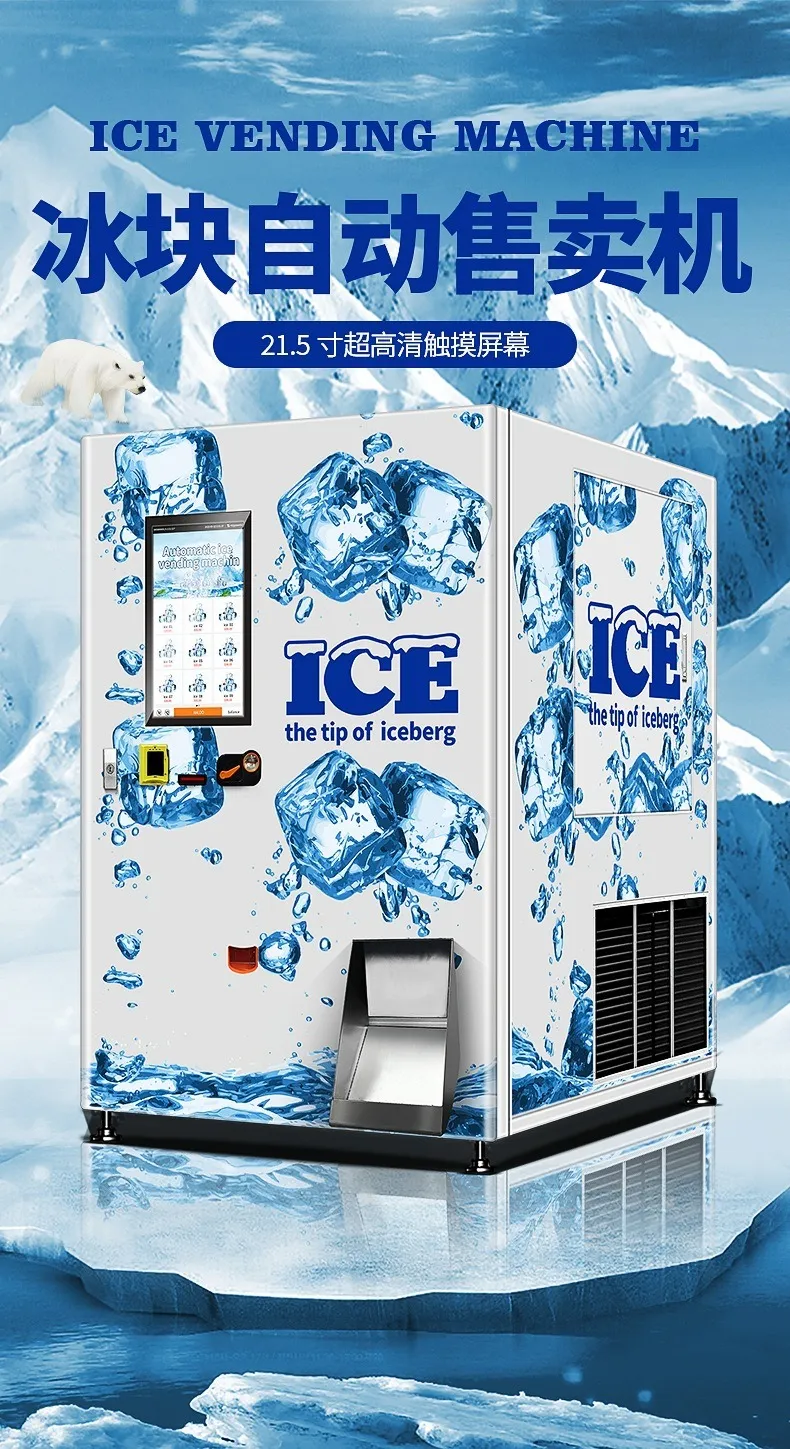
- Topic: ice vending machine vs smart freezer / AI cooler
- Best for: buyers comparing ice, frozen food, AI cooler and smart vending concepts
- Key answer: Use ice vending for bulk or bagged ice demand; use smart freezers or AI coolers for packaged frozen SKU retail. They need different cabinets, utilities, sensors, service routines and ROI models.
- Evidence used: technology context from Vendekin USA and HAHA Vending, plus ice vending references from IceRebus, Polar Ice & Water and Ice House America.
- Quote step: send site type, target daily ice volume, water/power/drainage conditions, payment market, and branding requirements to OBOvending.
Why are these machines often confused?
The confusion happens because both categories use refrigeration and unmanned payment. Search results and supplier pages may show ice machines, frozen food machines, AI coolers, smart freezers, and ice cream vending machines near each other. For a buyer, however, the operating logic is very different.
A smart freezer usually holds packaged SKUs. The operator loads products, monitors temperature, tracks inventory, and collects payment. An ice vending machine may create the product from water, store it, dispense it, or bag it. The machine must deal with water supply, drainage, ice maker capacity, sanitation, and ice quality. That is a bigger utility system than a freezer cabinet.
Source context used for buyer education: public product and marketing information from IceRebus, Polar Ice & Water, Ice House America, Vendekin USA, and HAHA Vending. Figures from competitor pages are cited only as market reference points; final OBOvending specifications depend on custom design.
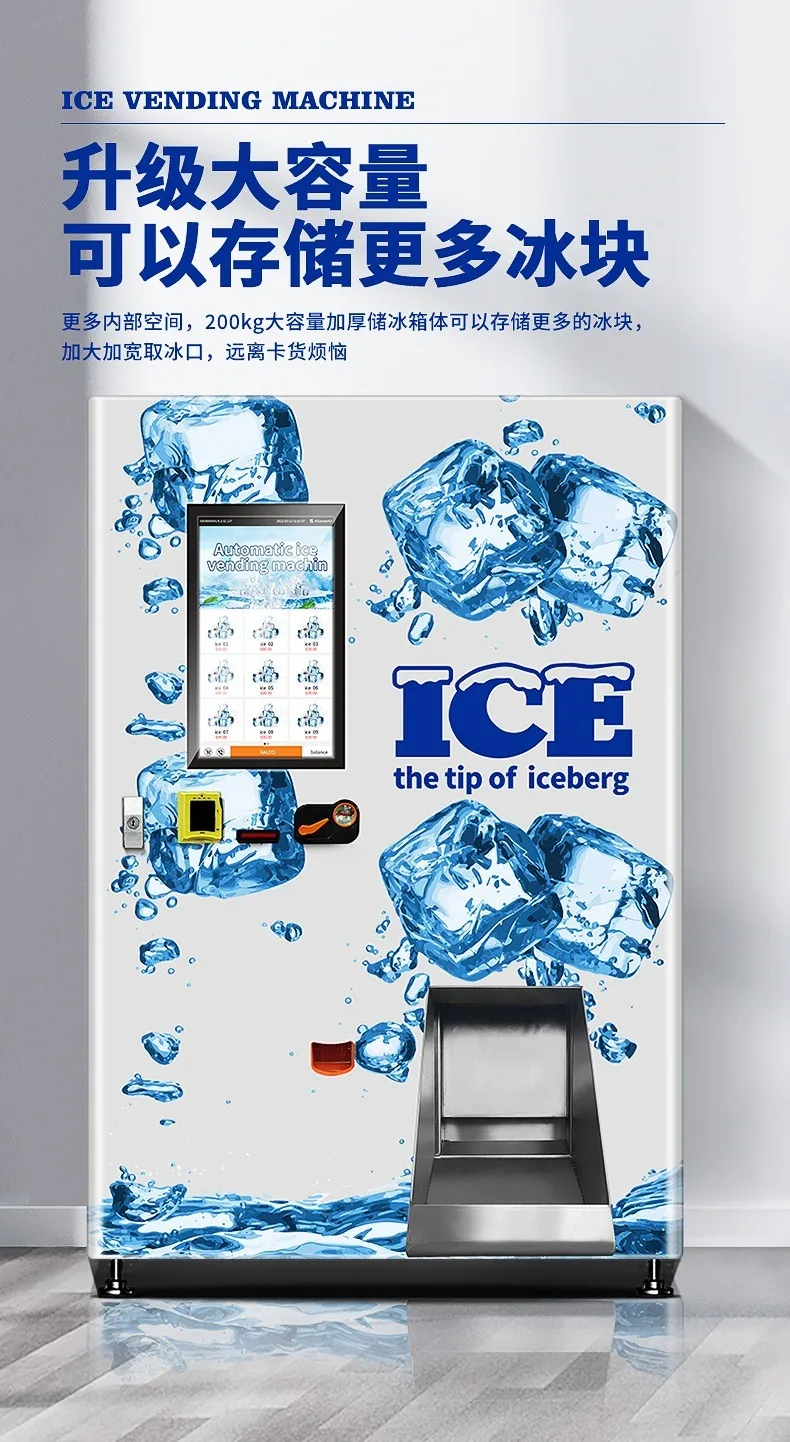
What does an ice vending machine do?
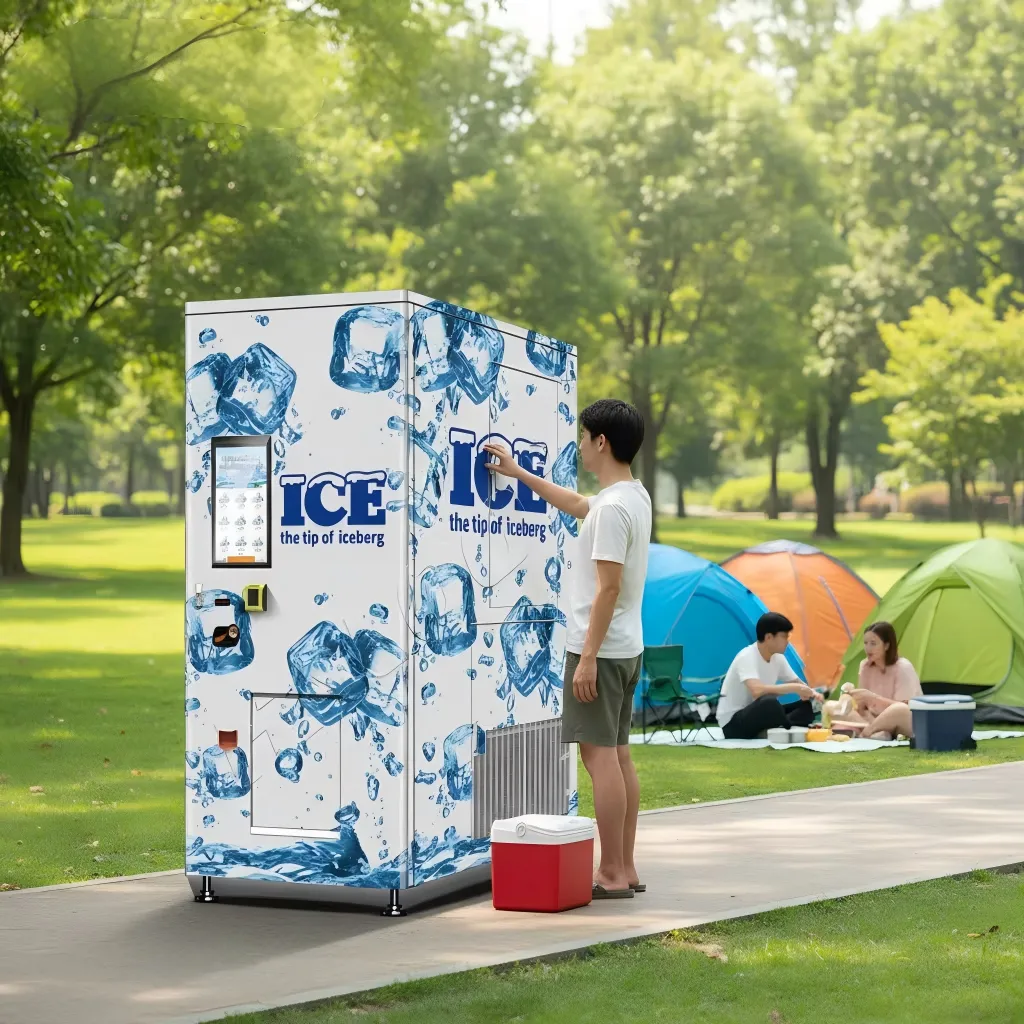
An ice vending machine is designed for ice demand. It may be installed at a gas station, campground, marina, convenience store, travel route, event area, or outdoor recreation site. The core customer wants ice quickly, often for coolers, drinks, fishing, boating, travel, or parties.
The machine should be evaluated by daily ice production, storage capacity, water filtration, drainage, dispensing method, payment options, outdoor cabinet design, remote fault alerts, and service access. Product variety is usually less important than reliability and availability.
| Ice Vending Need | Design Question |
|---|---|
| Ice production | How much ice must be made per day and during peak demand? |
| Water quality | What filtration is needed for taste, scale and trust? |
| Dispensing | Loose ice, bagged ice, or ice plus water? |
| Outdoor use | What weather, ventilation and cabinet protection are required? |
| Monitoring | How will the operator know if the ice maker or payment system fails? |
What does a smart freezer or AI cooler do?
A smart freezer or AI cooler is designed for packaged products. It may use a glass door, cabinet sensors, computer vision, smart lock, tray monitoring, or conventional vending delivery mechanisms. The key questions are SKU size, packaging, temperature range, customer selection, inventory accuracy, restocking, and payment.
This category fits frozen meals, ice cream, packaged desserts, frozen snacks, specialty food, or other cold-chain products. It can use cashless payment, remote stock monitoring, temperature alerts, and refund workflows. These are useful technologies, but they do not automatically create an ice station.
Which business model fits each machine?
Choose ice vending when the site has repeated ice-buying occasions and can support water, power, drainage, cleaning, and machine service. Choose a smart freezer when the business is SKU retail: the operator wants to merchandise packaged frozen goods with controlled temperature and inventory management.
A gas station near a lake may need an ice vending station. A residential building lobby may need a smart freezer with frozen meals. A gym might need a protein vending machine, not an ice station. A hotel may need a freezer for packaged desserts or an ice maker for guest service, but those are not the same procurement decision.
| Business Goal | Better Fit | Reason |
|---|---|---|
| Sell bulk ice for coolers | Ice vending machine | ice production and dispensing are central |
| Sell frozen meals | Smart freezer | packaged SKU inventory matters |
| Sell ice cream cups | Smart freezer / frozen vending | requires packaged frozen merchandising |
| Sell purified water plus ice | Ice-and-water vending | needs filtration and water outlet |
| Deploy AI checkout cooler | AI cooler | focuses on recognition, lock and inventory |
How should buyers avoid the wrong purchase?
The wrong purchase usually starts with a vague inquiry. A buyer says “I need a cold vending machine” without defining the product and site. The supplier then recommends a machine that looks close but does not fit the operation. To avoid this, buyers should provide product photos, dimensions, temperature requirements, site utility conditions, target customers, and expected operating workflow.
OBOvending should respond by classifying the project first: ice station, ice-and-water station, smart freezer, AI cooler, frozen food vending, or custom cold-chain vending. Once the category is clear, the machine architecture can be selected correctly.
Related OBOvending planning resources: custom vending machine cost, software integration checklist, how to choose a custom vending machine manufacturer, and vending machine payment system planning.
FAQ
Can a smart freezer replace an ice vending machine?
Usually no. A smart freezer stores packaged frozen products, while an ice vending machine produces, stores, bags, or dispenses ice.
Can an ice vending machine sell ice cream?
Not normally. Ice cream requires packaged frozen product storage and merchandising, which is closer to a smart freezer vending model.
Why include HAHA Vending and Vendekin in this comparison?
They represent smart cooler/freezer and smart vending technology angles, which buyers may confuse with dedicated ice vending stations.
Technical Differences Buyers Should Not Ignore
A smart freezer is usually a closed cold-storage retail cabinet. It needs temperature control, inventory tracking, payment, door or dispensing control, and restocking. An ice vending machine is closer to a production-and-dispensing utility system. It may need water inlet control, filtration, ice production, storage, drainage, sanitation, bagging or loose-ice delivery, and outdoor service access.
Because the systems are different, the failure modes are different. In a smart freezer, common concerns include temperature excursions, door issues, inventory mismatch, product packaging damage, and restocking errors. In an ice station, concerns include water quality, ice maker faults, drainage, scale, storage level, dispense jams, sanitation, and peak production limits.
| Technical Area | Ice Vending Machine | Smart Freezer / AI Cooler |
|---|---|---|
| Product source | ice produced or dispensed from water/ice system | operator loads packaged SKUs |
| Utilities | water, drain, power, sometimes data | power and data mainly |
| Maintenance | cleaning, filters, ice maker service | defrost, cleaning, stock and sensors |
| Customer decision | bag size, ice/water option | SKU selection |
| Best KPI | uptime, bags sold, production capacity | stock accuracy, sell-through, temperature stability |
How to Decide in a Custom Vending Project
The buyer should start by defining the product. If the product is loose ice, bagged ice, or purified water, the project belongs in the ice vending or ice-and-water station category. If the product is packaged frozen goods, meals, desserts, or ice cream, the project belongs in smart freezer or frozen vending. If the buyer wants AI checkout, the supplier should evaluate whether computer vision or smart lock technology is justified by the SKU value and operating model.
The next step is to define the site. Outdoor roadside sites and recreational locations often favor ice vending if utilities are available. Indoor offices, apartment buildings, gyms, and hotels may favor smart freezers for packaged products. A convenience store could use either, but the business goal is different.
OBOvending can use this comparison to prevent category confusion. When an inquiry says “ice vending,” the first question should be whether the buyer means ice cubes/bagged ice or ice cream/frozen products. That single clarification can prevent wrong images, wrong quotations, and wrong machine architecture.
What to Prepare Before Requesting a Custom Quote
Before asking for a final price, buyers should prepare a short technical brief. This does not need to be complicated, but it should be specific enough for the manufacturer to judge the correct machine architecture. The brief should explain where the machine will be installed, who will maintain it, how customers will pay, whether the machine must sell ice only or ice plus water, and what kind of peak demand the operator expects.
| Information | Why OBOvending Needs It |
|---|---|
| Target country and installation city | Payment habits, voltage, climate and service expectations can change by market. |
| Expected daily and peak sales | Capacity should be sized around real demand, not only cabinet appearance. |
| Available power, water and drainage | These conditions decide whether the project needs a standard layout or site-specific engineering. |
| Preferred payment methods | Cash, card, tap-to-pay and mobile wallets require different hardware and certification paths. |
| Branding and operator workflow | Graphics, screen interface, remote monitoring and maintenance access should support daily operation. |
This preparation also helps avoid wrong visual comparisons. An ice vending station, an ice-and-water station, and a smart freezer may all look like cold retail machines, but they have different utility, software, sanitation and maintenance requirements. A clear project brief lets OBOvending recommend the correct system instead of forcing the buyer into a generic machine.
 Privacy respected. No spam. Ever.
Final buyer note: in real projects, ice vending specifications should be confirmed through site data, not only by copying a competitor page. The practical way to reduce risk is to define the product form, expected sales rhythm, local utility conditions, cleaning workflow, payment requirements, and service responsibility before machine drawings are finalized. This protects both the operator and the manufacturer from expensive changes after production.