
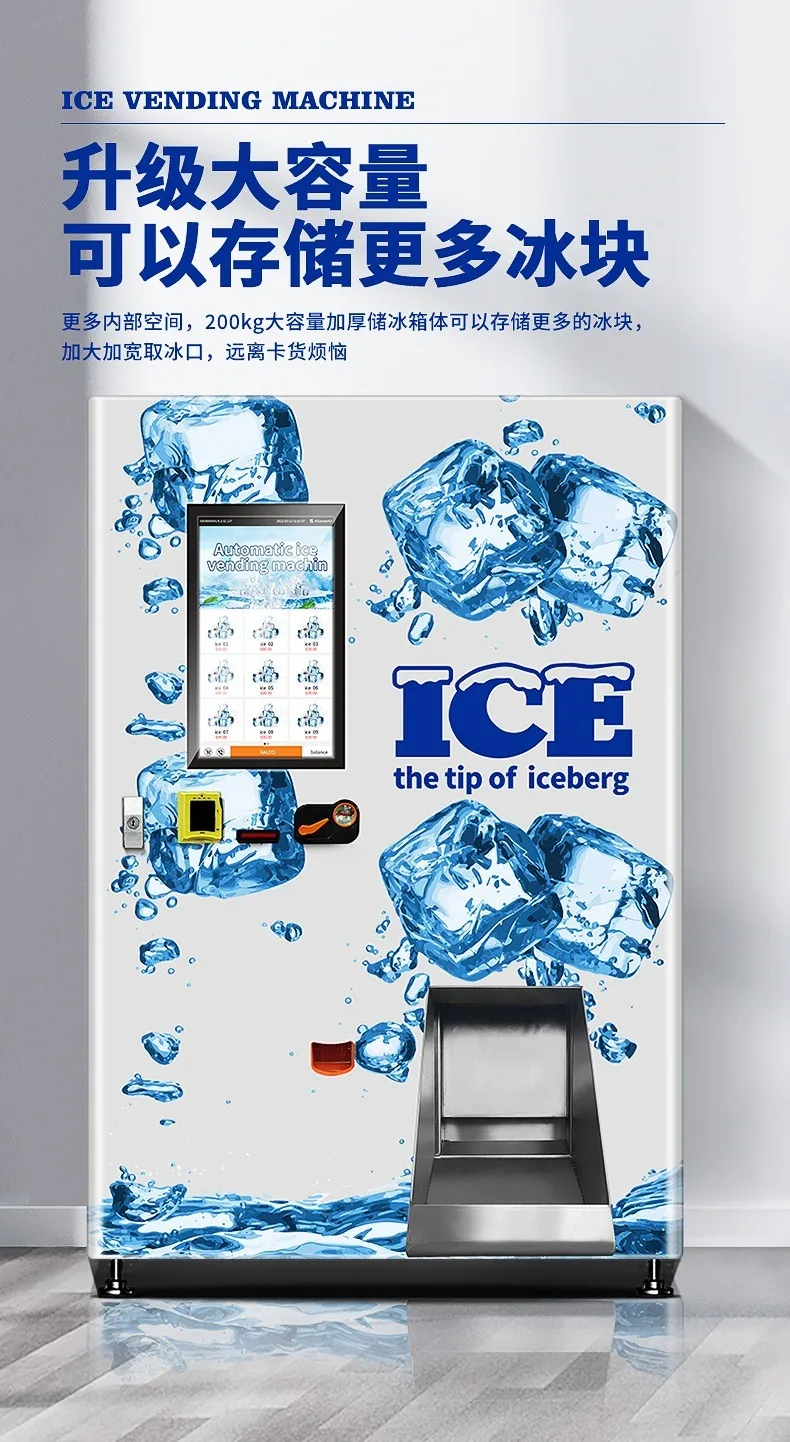
An ice vending machine focuses on selling ice. An ice and water vending machine adds purified water dispensing, usually for refill bottles, jugs, or travel use. The second model can create more value at the right location, but it also adds filtration, sanitation, plumbing, interface, and maintenance requirements.
The best choice depends on customer behavior, site utilities, water quality, service capability, and whether the location has demand for both ice and purified water.
- Topic: ice and water vending machine versus ice-only vending
- Best for: buyers comparing outdoor vending station concepts for the USA and similar markets
- Key answer: Choose ice-only when the core demand is ice convenience; choose ice-and-water when the site also has strong refill-water demand and can support filtration and sanitation operations.
- Evidence used: Polar Ice & Water and Ice House America publicly position ice-and-water stations as a category, while other vending technology brands focus more on smart retail and payment functions.
- Quote step: send site type, target daily ice volume, water/power/drainage conditions, payment market, and branding requirements to OBOvending.
What is the basic difference?
The basic difference is product scope. An ice-only machine produces, stores, bags, or dispenses ice. An ice-and-water machine also dispenses treated water. This may sound like a simple add-on, but it changes the system. Water vending makes filtration, taste, sanitation, dispensing rate, bottle placement, and customer instructions more important.
In ice-only vending, the customer usually wants speed: pay, receive ice, load it into a cooler, and leave. In water vending, the customer may bring a container, position it under the outlet, wait for filling, and care about taste and cleanliness. The machine interface and physical layout should support both behaviors without confusion.
Source context used for buyer education: public product and marketing information from IceRebus, Polar Ice & Water, Ice House America, Vendekin USA, and HAHA Vending. Figures from competitor pages are cited only as market reference points; final OBOvending specifications depend on custom design.
When does ice-and-water make sense?
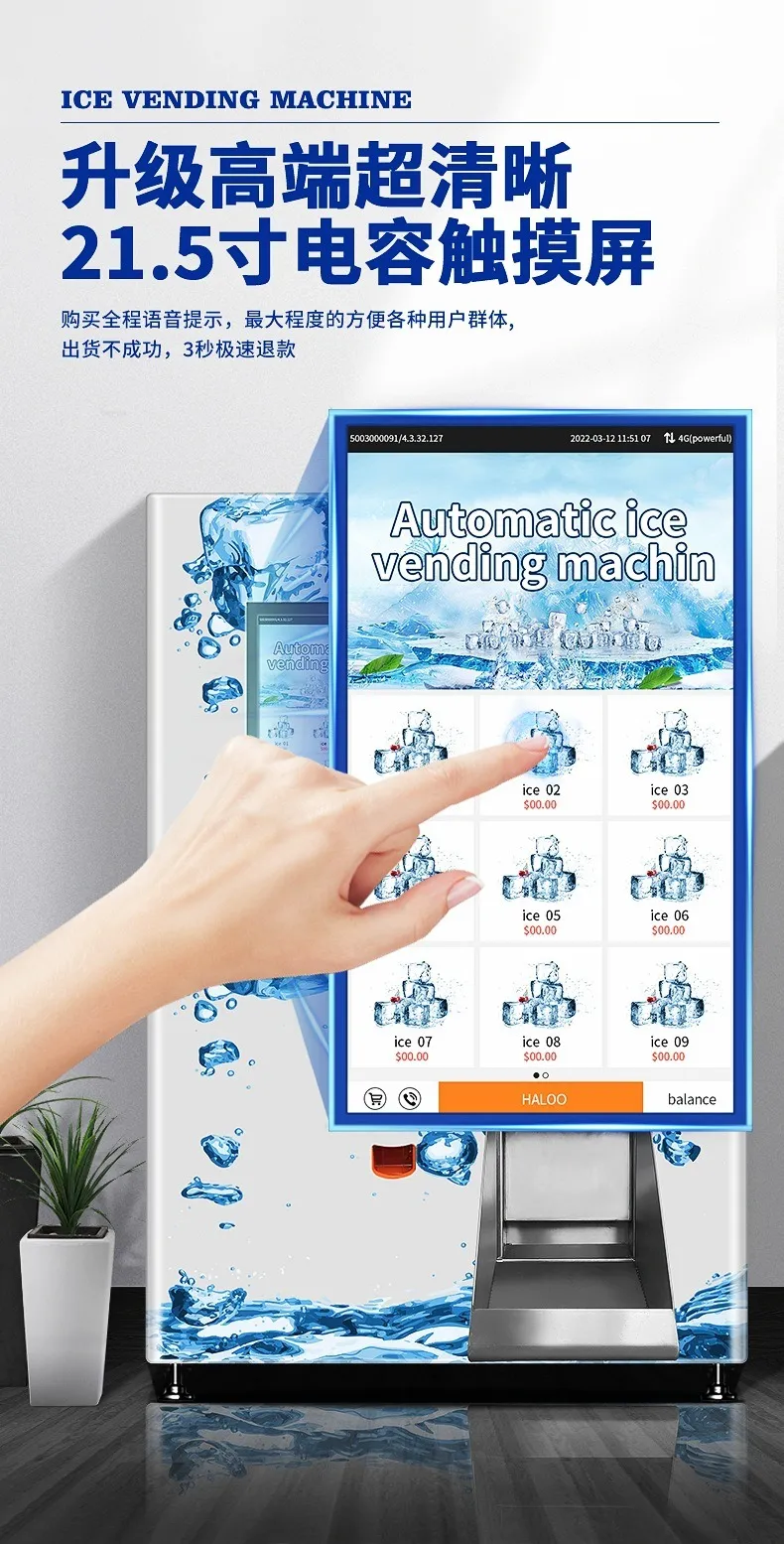
Ice-and-water makes sense where customers already buy both products. Campgrounds, RV parks, marinas, outdoor recreation areas, travel routes, and some community retail lots can fit this model. The value is convenience: one stop for ice and water before a trip, event, fishing day, or camping stay.
The model is weaker if customers only need ice, if the site has poor water quality that requires expensive treatment, or if the operator cannot maintain filters and sanitation routines. Adding water should be a business decision, not a feature added because it sounds attractive.
| Location | Ice-Only Fit | Ice + Water Fit |
|---|---|---|
| Gas station | strong for quick ice purchase | good if travelers refill water |
| Campground | strong weekend demand | often strong for water refills |
| Marina | strong for coolers and fishing | can be strong if boaters need water |
| Urban store | depends on competition | depends on local water-buying behavior |
| Event venue | temporary ice demand | water may need special flow and hygiene planning |
What extra systems does water vending require?
Water vending adds a filtration and sanitation responsibility. The buyer should discuss inlet water quality, sediment filtration, carbon filtration, reverse osmosis or other treatment if required, UV or sanitation options where suitable, filter replacement intervals, cleaning access, drain design, and local compliance expectations.
The machine should also make customer operation easy. The water outlet, container platform, display instructions, payment timing, and dispense control must be intuitive. A customer who spills water or cannot understand the interface may not return.
How do layout and customer flow change?
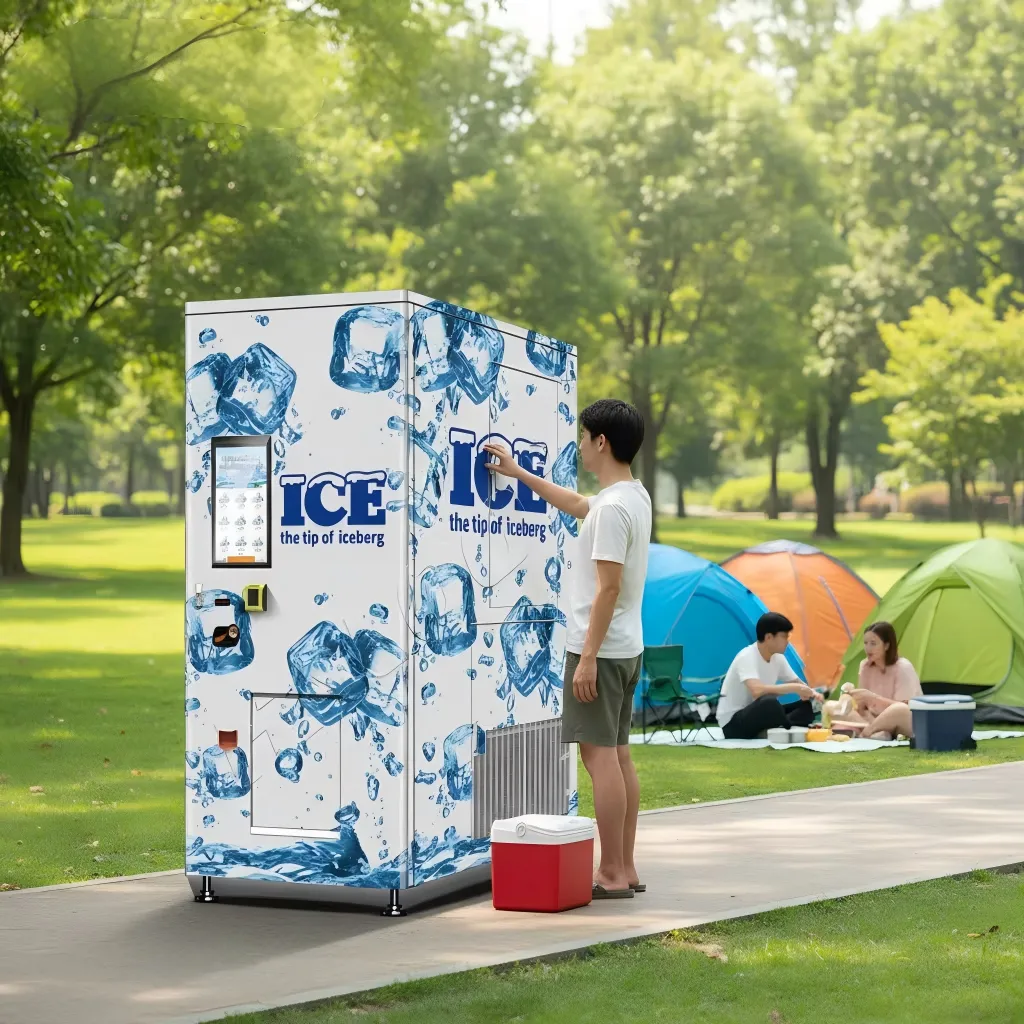
Ice-only machines can often use a simpler customer flow. Ice-and-water machines need separate physical zones or clearly separated steps. If the same payment terminal controls both products, the interface should prevent selection errors. If two outlets exist, they should be positioned so one customer does not block another unnecessarily.
Service layout also changes. Technicians need access to filters, valves, water lines, drain points, ice maker components, sensors, and payment hardware. A cabinet that looks compact but hides service parts behind difficult panels may increase long-term operating cost.
| Design Area | Ice-Only | Ice + Water |
|---|---|---|
| Customer interface | simple ice selection and payment | separate ice/water choices and instructions |
| Plumbing | water for ice production | water for ice plus direct customer dispensing |
| Filtration | important for ice quality | critical for water taste and trust |
| Maintenance | ice system cleaning and service | ice system plus water filters and outlet sanitation |
| Revenue | ice sales | ice sales plus water refill revenue |
How should buyers choose?
Choose ice-only when the site demand is mainly coolers, parties, fishing, drinks, and travel ice. Choose ice-and-water when the customer also needs purified water, the site has adequate utilities, and the operator can maintain filtration. A larger feature list is not automatically a better machine.
For a custom project, OBOvending should first ask whether water vending is truly part of the buyer’s business model. If yes, the machine can be designed around separate dispensing zones, filtration access, payment flow, and remote monitoring. If no, a focused ice vending system may be simpler, cheaper, and easier to operate.
Related OBOvending planning resources: custom vending machine cost, software integration checklist, how to choose a custom vending machine manufacturer, and vending machine payment system planning.
FAQ
Is an ice and water vending machine better than an ice-only machine?
It depends on the location. Ice-and-water can work well where customers need purified water refills, but it adds filtration, sanitation, plumbing, and interface complexity.
Does water vending require stronger filtration?
Yes. Water quality, taste, filtration stages, replacement schedule, and sanitation records become part of the customer trust system.
Can OBOvending customize either type?
Yes. The configuration can be planned around ice capacity, water dispensing, payment, cabinet layout, branding and remote monitoring.
How Filtration Changes the Ice-and-Water Decision
When water is sold directly to customers, filtration becomes part of the product experience. The buyer is not only protecting the machine from scale. The buyer is asking customers to trust the taste, cleanliness, and consistency of the water. This means filter type, replacement schedule, sanitation access, and visible cleanliness all matter.
A buyer should test or document local inlet water before choosing the machine. Hard water, sediment, chlorine taste, odor, and mineral content can affect filter choice and maintenance interval. In some markets, reverse osmosis or additional treatment may be considered. In others, a simpler multi-stage approach may be enough. The right answer depends on the site, not on a universal claim.
| Water Issue | Possible Effect | Buyer Response |
|---|---|---|
| Sediment | clogging and poor appearance | sediment pre-filter |
| Hardness/scale | ice maker service problems | scale control and maintenance plan |
| Taste/odor | low customer trust | carbon filtration or other treatment |
| Microbial risk | sanitation concern | cleaning schedule and suitable disinfection approach |
| Low pressure | slow filling or production limits | confirm pressure and flow before design |
When Ice-Only Is the Smarter Choice
Ice-and-water is attractive, but ice-only may be smarter when the site has clear ice demand but weak water refill demand. It may also be better when the operator wants simpler maintenance, faster installation, lower plumbing complexity, or a smaller cabinet. A focused machine can be more profitable than a complicated machine that customers do not fully use.
The decision should be made from customer behavior. If people come with coolers, boats, fishing gear, or party supplies, ice may be enough. If people also bring water jugs, RV containers, or refill bottles, water vending becomes more logical. The manufacturer should not push the larger configuration unless the business case supports it.
For OBOvending, this is a strong SIO angle: help buyers choose correctly. A buyer who feels the supplier is willing to recommend a simpler machine when appropriate is more likely to trust the quote for a larger system when it is truly needed.
What to Prepare Before Requesting a Custom Quote
Before asking for a final price, buyers should prepare a short technical brief. This does not need to be complicated, but it should be specific enough for the manufacturer to judge the correct machine architecture. The brief should explain where the machine will be installed, who will maintain it, how customers will pay, whether the machine must sell ice only or ice plus water, and what kind of peak demand the operator expects.
| Information | Why OBOvending Needs It |
|---|---|
| Target country and installation city | Payment habits, voltage, climate and service expectations can change by market. |
| Expected daily and peak sales | Capacity should be sized around real demand, not only cabinet appearance. |
| Available power, water and drainage | These conditions decide whether the project needs a standard layout or site-specific engineering. |
| Preferred payment methods | Cash, card, tap-to-pay and mobile wallets require different hardware and certification paths. |
| Branding and operator workflow | Graphics, screen interface, remote monitoring and maintenance access should support daily operation. |
This preparation also helps avoid wrong visual comparisons. An ice vending station, an ice-and-water station, and a smart freezer may all look like cold retail machines, but they have different utility, software, sanitation and maintenance requirements. A clear project brief lets OBOvending recommend the correct system instead of forcing the buyer into a generic machine.
 Privacy respected. No spam. Ever.
Final buyer note: in real projects, ice vending specifications should be confirmed through site data, not only by copying a competitor page. The practical way to reduce risk is to define the product form, expected sales rhythm, local utility conditions, cleaning workflow, payment requirements, and service responsibility before machine drawings are finalized. This protects both the operator and the manufacturer from expensive changes after production.